
Construction projects often face the same challenges: tight schedules, changing site conditions, labor coordination, material waste, and the need to maintain consistent quality. Traditional construction methods can address these challenges, but they may require a significant amount of work to be completed directly at the project site.
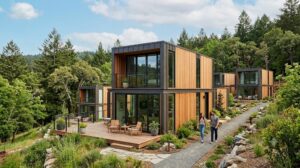
Modular Housing Systems offer a different approach. By manufacturing major building components in a controlled environment and assembling them at the required location, modular construction can make several stages of a project more organized and predictable. This approach is useful for housing developments, workforce accommodation, temporary facilities, and other projects where speed, consistency, and efficient space planning matter.
What Are Modular Housing Systems?
Modular housing involves producing building modules or components before transporting them to the final construction site. Depending on the project design, these modules can incorporate elements such as walls, floors, ceilings, doors, windows, insulation, electrical provisions, plumbing, and interior finishes.
Instead of completing every construction activity from the ground up at the site, a portion of the work is performed in a controlled manufacturing environment. Once the prepared modules reach the project location, they can be positioned, connected, and completed according to the approved design.
This creates a more coordinated construction process in which off-site manufacturing and on-site installation work together.
Faster Construction Through Parallel Work
One of the most important advantages of modular construction is the ability to perform different activities at the same time.
In conventional construction, many tasks follow a sequence. Foundations may need to be completed before certain structural and building activities can proceed. With modular construction, manufacturing of building components can take place while site preparation and foundation work are underway.
This parallel workflow can reduce the amount of time required between the beginning of a project and the point at which the building becomes ready for use. The actual schedule will depend on the design, project size, site conditions, approvals, transportation, and installation requirements, but separating manufacturing from some site activities can create valuable scheduling flexibility.
Better Control Over Manufacturing
Weather, site congestion, and changing working conditions can affect construction activities. A controlled manufacturing environment can reduce the impact of some of these variables.
Components are produced using defined processes, measurements, and quality checks. Workers can operate with dedicated equipment and organized workstations instead of dealing with the limitations of a constantly changing construction site.
This controlled approach can help improve consistency between modules and make it easier to identify issues before components are transported to the project location.
For housing projects involving multiple similar units, repeatable manufacturing processes can be particularly useful because the same design principles and production standards can be applied across different modules.
More Efficient Use of Materials
Material management plays an important role in construction efficiency. Conventional building sites may require materials to be stored, cut, moved, and handled repeatedly. Poor planning can contribute to unnecessary offcuts, damaged materials, and site waste.
Modular manufacturing allows material requirements to be planned around standardized components and production measurements. Materials can be prepared in a dedicated facility, where cutting and assembly are carried out in a more controlled environment.
This does not mean modular construction eliminates waste. However, better planning and controlled production can help reduce avoidable material losses and make resource use more organized.
Reduced Site Disruption
A busy construction site can become difficult to manage when numerous trades, deliveries, tools, and materials are operating in the same area.
Because significant portions of modular units are prepared away from the final site, fewer construction activities may need to take place directly at the project location. On-site work can then focus more heavily on foundations, connections, module placement, services integration, finishing, and other project-specific tasks.
This can be especially valuable for projects located in areas where access is restricted or where minimizing disruption to surrounding activities is important.
Consistent Quality Across Multiple Units
Large housing projects often involve producing several units with similar layouts and specifications. Maintaining consistency can become challenging when every unit is constructed independently on site.
Modular Housing Systems support repeatable production. Once a design has been established, the same construction details can be reproduced across multiple modules while following defined manufacturing and inspection procedures.
Consistency can help with dimensions, finishes, component placement, and overall appearance. Quality still depends on the materials, design, manufacturing processes, installation practices, and quality-control procedures used for the specific project, but standardized production provides a structured foundation for maintaining uniformity.
Improved Labor Efficiency
Construction efficiency is not simply about reducing the number of workers. It is also about using skilled labor effectively and organizing work so that people spend less time dealing with avoidable delays.
Modular construction can move certain tasks from the project site into a manufacturing facility. Workers can perform specialized activities in dedicated production areas with appropriate tools and equipment.
At the site, installation teams can focus on assembling and integrating completed components rather than carrying out every stage of construction from scratch.
This division of work can make workforce planning easier, particularly when projects involve repeated building layouts.
Simplified Project Coordination
Construction involves many interconnected activities. Architects, engineers, manufacturers, contractors, suppliers, installers, and project managers all need to work from compatible information.
Modular construction encourages detailed planning before manufacturing begins. Dimensions, layouts, connections, material specifications, openings, service requirements, and transportation considerations need to be coordinated in advance.
This upfront planning can help identify potential conflicts earlier in the process. It also means that design decisions affecting manufactured components need to be considered carefully before production starts.
The result can be a more structured workflow, where manufacturing and site installation are based on clearly defined project requirements.
Flexible Solutions for Different Housing Needs
Efficiency does not necessarily mean using one standard design for every project. Modern modular buildings can be configured according to different space requirements and functional needs.
Housing solutions may be designed for worker accommodation, residential applications, educational facilities, site offices, healthcare-related spaces, or other uses. Depending on the system, modules can be combined in different layouts to create larger accommodation blocks or customized floor plans.
This flexibility allows project teams to balance standardized manufacturing with the specific requirements of the development.
Easier Planning for Remote or Challenging Locations
Some construction projects are located far from major urban centers or in areas where traditional site construction can be difficult to organize. Transporting every raw material and coordinating numerous trades on location may create logistical challenges.
Prefabricated and modular components can provide another option. Much of the construction work can be completed before the units arrive at the site, allowing project teams to concentrate on planned installation activities.
However, transportation dimensions, road access, lifting equipment, site preparation, and local regulations must be considered during the design stage. Efficient modular construction depends on planning these practical factors rather than treating transportation as an afterthought.
Why Early Design Planning Matters
The benefits of modular construction begin long before modules arrive at a construction site.
Design teams need to consider module dimensions, structural requirements, connections, service integration, transportation limitations, lifting arrangements, and installation sequences. Changes made after manufacturing begins may be more difficult to accommodate than changes made during the planning stage.
For this reason, collaboration between designers, manufacturers, contractors, and other project stakeholders is essential. A well-coordinated design can help the manufacturing process run smoothly and reduce avoidable adjustments during installation.
The Role of TSSC Group
TSSC Group provides building and housing-related solutions designed around different project requirements. Its housing solutions cover modular approaches that can support projects requiring practical space planning, efficient construction processes, and adaptable building configurations.
For project teams considering modular construction, understanding the required application, site conditions, design specifications, materials, and installation requirements is an important first step. Working with an experienced solutions provider can help ensure that these factors are considered together rather than separately.
Making Construction More Predictable
The biggest contribution of modular construction is not simply speed. Its broader value comes from moving more activities into a planned and controlled production process.
By combining off-site manufacturing with organized site installation, Modular Housing Systems can support faster workflows, consistent production, better material planning, and more efficient use of labor. They can also provide flexibility for projects where traditional construction methods may create scheduling or logistical challenges.
As construction projects increasingly focus on efficiency, resource management, predictable delivery, and adaptable building solutions, modular construction provides a practical approach worth considering. The right system will depend on the project’s design, location, budget, schedule, regulations, and intended use, but careful modular planning can make the overall construction process more coordinated from production through final installation.