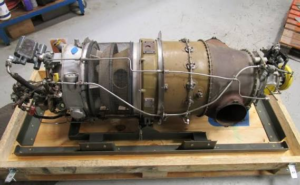

The GTCP331-350 is a Honeywell auxiliary power unit serving the Airbus A330 and A340 families. It supplies bleed air and electrical power during ground operations and engine starts, and its high power-to-weight ratio has made it a standard reference point for widebody APU sourcing discussions across both platforms. For A330 and A340 operators, understanding the current supply and maintenance environment for the GTCP331-350 is the starting point for avoiding the reactive sourcing situations that consistently produce the worst cost and timeline outcomes.
What Distinguishes the GTCP331-350C From Other 331 Series Models
The 331 series spans several models covering different Boeing and Airbus widebody platforms. The GTCP331-350C under part number 3800454-6 is specific to the A330 and A340 and is not interchangeable with the GTCP331-200ER serving the Boeing 757 and 767, or the GTCP331-500B serving the Boeing 747-400. Each variant has a distinct installation interface and performance specification, and sourcing the wrong variant creates installation problems that delay return to service rather than resolving it.
One technically significant distinction for A330 and A340 operators is that the GTCP331-350C carries no life-limited parts in the traditional cycle-tracked sense. Unlike models governed by LLP thresholds expressed in cycles, the GTCP331-350C is maintained by condition through scheduled inspections, time-based intervals, and shop visit workscopes defined in the Honeywell component maintenance manual. This changes the maintenance planning model. Instead of tracking CSN against fixed limiter values, operators manage this unit primarily through condition monitoring and time-since-overhaul intervals, which means the completeness of the maintenance history document carries more weight in any unit evaluation than it would for an LLP-tracked model.
How the A330 and A340 Fleet Split Affects Supply
The A340 production line closed in 2011, and that fleet has been contracting as operators retire four-engine widebodies in favor of more fuel-efficient twin-engine aircraft. The A330 family remains in active production and service, sustaining ongoing demand for GTCP331-350C units across a broader installed base.
The supply pool for this model reflects both trends simultaneously. A340 retirements release units into the secondary market, which provides some supply relief. However, the number of authorized MRO facilities and lessors maintaining direct inventory is narrower than for high-volume narrowbody models. For A330 operators managing growing fleets, sourcing units with recent overhaul history and complete condition documentation requires more deliberate effort and longer lead times than a 737 NG or A320 family APU event would require.
What This Means for Maintenance Planning
One distinction that affects how A330 and A340 operators approach planning is that the GTCP331-350C does not carry mandatory LLP retirement limits in the same way that models like the GTCP331-500B or APS5000 do. Unlike those models, where a hard cycle threshold triggers mandatory part replacement, the GTCP331-350 is primarily maintained by condition through scheduled inspections, borescope assessments, and time-based overhaul intervals defined in the Honeywell component maintenance manual. However, rotating components on this model still require CSN tracking for condition assessment and airworthiness purposes. Operators should not interpret the absence of hard LLP retirement limits as an absence of cycle-based monitoring obligations. Shop visit timing is driven by a combination of condition findings and accumulated time and cycles, and planning models that ignore either variable will produce inaccurate maintenance projections.
The maintenance history document carries significant weight in evaluating any GTCP331-350C unit on offer. A unit without a complete maintenance record, covering all work performed since new or last overhaul and including current CSN data for rotating components, cannot be fully assessed for condition. Gaps in that history create airworthiness questions that are difficult to resolve after the unit has entered service.
Planning in a Specialized Supply Market
For A330 operators expanding fleets through new deliveries or lease-in aircraft, APU maintenance events will accumulate at a growing rate. Operators who establish GTCP331-350C sourcing relationships before a removal occurs have confirmed availability and reviewed documentation to draw on when the event happens. Those who enter the market at the point of need work with fewer options and less negotiating leverage in a supply pool that is more specialized than most fleet managers initially expect.
Geographic positioning of available inventory should also be confirmed before committing to any transaction. A unit located in the same region as the AOG event can typically be delivered significantly faster than one requiring intercontinental freight, and that delivery timeline variable is as consequential to ground time outcomes as the speed of the commercial negotiation itself