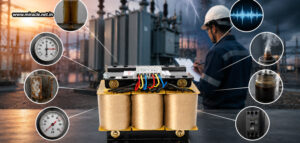

Power transformers are engineered to provide consistent power for many years. Nevertheless, even the most robust transformer can be impacted by factors like aging, environmental conditions, varying loads, and standard operational wear. Overlooking early warning signs can lead to expensive repairs, unexpected downtime, reduced equipment performance, and significant safety hazards. However, the good news is that transformers typically show clear signs before a major failure takes place. By identifying these signs through routine inspections and preventive maintenance, issues can be resolved early, prolonging the transformer’s lifespan and ensuring safe, reliable, and efficient operation. This practical checklist outlines the primary warning signs indicating that your transformer may require maintenance or replacement.
Why early detection matters
Waiting for a transformer to fail can lead to unanticipated downtime, production losses, expensive emergency replacements, hasty procurement, installation delays, and possible damage to connected equipment. Proactive maintenance can avert these issues while lowering long-term operational expenses. By recognizing early warning signs, organizations can enhance equipment reliability, prolong transformer lifespan, improve workplace safety, and decrease the chances of unexpected shutdowns. Preventive maintenance also enables scheduling repairs or replacements during planned shutdowns instead of in emergency situations, thereby minimizing operational disruption. The practical checklist below is intended to help evaluate the condition of transformers and decide when maintenance or replacement should be considered.
Warning signs for transformer issues
Recognizing early transformer warning signs helps prevent failures, reduce downtime, and ensure reliable performance through timely maintenance and corrective action.
- Unusual noise levels
Transformers are always humming due to magnetic vibrations within the core. However, a certain amount of humming is normal, but any changes in the sound should never be ignored. Louder-than-normal humming, buzzing sounds, clicking sounds, crackling sounds, and sudden vibration-related noise should be inspected. These sounds may indicate loose core components, winding movement, electrical arcing, or mechanical deterioration.
- Excessive vibration
Mechanical vibration naturally occurs during operation. However, if there is increased vibration than regular, it may indicate mechanical wear, loose internal structures, core movement, and foundation problems. Unchecked vibration accelerates component fatigue and increases the likelihood of future failures.
- Excessive heat generation
Transformers certainly get hot during operation, but if they consistently operate hotter than normal, it could indicate an issue. Possible causes include overloading, poor ventilation, blocked cooling passages, cooling fan failure, or dirty radiators. Any rise in the normal temperature should be investigated as it may deteriorate the insulation materials faster and reduce the overall lifespan of the equipment.
- Burnt or unusual smell
Transformers should never produce burning or unusual smells during normal operation. Any changes in smell may indicate overheated insulation, internal overheating, electrical arcing, components failure, or loose electrical connections. Even if the transformer continues operating, unusual smells warrant immediate inspection; ignoring them can allow minor faults to escalate rapidly.
- Oil leaks
In oil-filled transformers, the insulating oil performs two critical functions – electrical insulation and heat dissipation. Oil leakage in these transformers can pose problems and risks; small leaks often become larger if left unattended. Leaks may originate from gaskets, valves, bushings, pipe connections, weld joints, and conservator tanks. Any leaks must be checked as it can result in reduced cooling efficiency and risk of internal insulation failure.
- Changes in oil condition
Transformer oil naturally ages over time, which must be checked and replaced. Watch out for darkened oil, cloudy appearance, sludge formation, or burnt smell. Such contaminated or degraded oil reduces dielectric strength and accelerates insulation deterioration. The oil must be regularly tested to reveal issues long before visible symptoms appear.
- Moisture ingress
Water can enter a transformer through damaged seals, cracked bushings, faulty breathing systems, or condensation. Even small amounts of moisture can reduce dielectric strength, accelerate insulation aging, and increase the risk of internal faults. Identifying and addressing moisture ingress early helps prevent costly damage and extends transformer service life.
- Energy losses
If electricity consumption gradually increases without any corresponding increase in production, transformer efficiency should be evaluated. Aging transformers may experience high core losses, increased winding losses, reduced cooling efficiency, and internal deterioration. Even small efficiency losses become significant over years of continuous operation.
- Frequent tripping
Repeated protective trips should never be ignored as minor electrical disturbances. Frequent operation may indicate underlying issues such as internal faults, overloading, insulation breakdown, cooling failures, short circuits, or ground faults. Identifying and addressing the root cause is essential before restoring the transformer to operation to prevent further damage and ensure safety.
A practical inspection checklist
Regular inspections become much more effective when performed systematically. During routine maintenance, check whether the transformer shows any of the following:
- Unusual humming, buzzing, or crackling sounds
- Higher operating temperatures than normal
- Frequent temperature alarms
- Oil leaks or falling oil levels
- Dark, contaminated, or burnt-smelling oil
- Visible rust, corrosion, or physical damage
- Moisture around seals or bushings
- Repeated circuit breaker or relay trips
- Voltage instability
- Excessive vibration
- Rising energy losses
The more warning signs present, the more urgent a detailed inspection becomes.
Maintenance or replacement?
Not every transformer issue requires immediate replacement. Minor problems such as small oil leaks, cooling fan failures, or loose connections can often be resolved through timely repairs. However, replacement may become the better option when insulation deterioration, repeated failures, high repair costs, outdated equipment, limited capacity, poor efficiency, or safety concerns are involved. A detailed technical assessment helps determine the most practical solution. When selecting a new transformer, factors such as load requirements, operating environment, future expansion, efficiency goals, and installation conditions should be considered to ensure long-term reliability, performance, and cost-effectiveness. Miracle Electronics is recognized as a top transformer manufacturer in India, offering advanced transformer designs engineered for demanding industrial and commercial applications. With a focus on quality, efficiency, and performance, the company provides transformers designed to deliver dependable power management, improved system reliability, and long-term operational value across diverse electrical requirements.
Transformers are designed to deliver years of reliable service; however, like any essential electrical equipment, they need regular maintenance to operate safely and efficiently. Minor warning signs—such as unusual sounds, overheating, oil leaks, voltage fluctuations, or frequent protective trips—should never be ignored. Early detection of these issues enables maintenance teams to tackle problems before they develop into expensive failures or unexpected downtime. Although routine maintenance can fix many concerns, there comes a time when replacement is the more prudent choice. Selecting a transformer that aligns with current operational needs, environmental factors, and future expansion plans is crucial for ensuring long-term reliability, enhanced efficiency, and safer electrical operation. Proactive monitoring, timely maintenance, and well-informed replacement choices form the cornerstone of a robust and efficient power system.