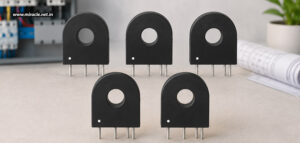

Current Transformers (CTs) play a vital role in contemporary electrical systems, facilitating precise current measurement, monitoring, and protection. They enable the safe reduction of high currents in power networks to standardized values that are compatible with meters, monitoring devices, and protective relays. However, not all CTs are suited for identical operating conditions. A decision about choosing between a High Voltage Current Transformer and a Low Voltage Current Transformer needs to be made wisely. Although both high and low voltage current transformers function based on the same fundamental principle of electromagnetic induction, their construction, applications, and design requirements vary considerably. Choosing the right CT is crucial, as an inappropriate selection can impact measurement accuracy, protection reliability, and the overall performance of the system. Miracle Electronics is a trusted current transformer manufacturer in India, offering high-quality CT solutions designed for accurate measurement, reliable protection, and efficient performance across diverse electrical applications, including industrial, commercial, and power system requirements.
Understanding the role of current transformers in power systems
Current transformers convert high primary current into a lower secondary current that can be safely measured by electrical instruments. They also provide electrical isolation between high-power circuits and sensitive measuring or protection equipment. Widely used in distribution networks, industrial electrical panels, energy metering systems, power generation plants, renewable energy installations, and protection and control systems, the main purpose of a current transformer is not only to measure current, but also to ensure that electrical systems operate safely and efficiently. Depending on the voltage level of the network where the transformer is installed, it is classified mainly as a High Voltage CT or a Low Voltage CT.
Understanding high voltage and low voltage current transformers
A High Voltage Current Transformer is designed for electrical systems operating at medium and high voltage levels. These transformers are used in systems where voltage levels can range from several kilovolts to hundreds of kilovolts. Since high voltage systems involve extremely high electrical stress, high voltage CTs require advanced insulation systems and robust mechanical construction to ensure safe and reliable operation. Their primary functions include accurate current measurement, energy monitoring, and providing signals to protective relays during abnormal operating conditions.
A Low Voltage Current Transformer is designed for electrical systems operating at low voltage levels, typically up to 1 kV. These transformers are used in commercial, industrial, and residential electrical installations where insulation requirements are comparatively less demanding than in high voltage systems. Their primary functions include accurate current measurement, energy monitoring, and providing signals to protective devices for equipment safety. They also support load monitoring, energy management, and reliable system operation while maintaining a compact, economical, and easy-to-install design.
Key differences between high voltage and low voltage current transformers
Although both high voltage and low voltage current transformers perform the same basic function, their design and applications differ significantly.
- Voltage rating and application area
High voltage transformers are designed for systems where electrical insulation must withstand high voltage stress. They are used in transmission and distribution networks where reliability and safety are critical.
Low voltage transformers are designed for low-voltage applications like industrial panels, commercial buildings, and electrical equipment monitoring. They focus primarily on accurate measurement and system control rather than high-voltage insulation performance.
- Insulation requirements
High voltage transformers require advanced insulation systems to prevent electrical breakdown. They often use oil insulation, gas insulation, high-grade epoxy insulation, and composite insulation systems, which help the transformer withstand high voltage stresses, switching surges, and environmental conditions.
Low voltage transformers operate at lower voltage levels and therefore require comparatively simpler insulation designs. Their insulation mainly protects against normal operating voltage conditions and ensures safe interaction with connected equipment.
- Construction and physical design
High voltage transformers generally have larger and more complex designs as they are required to handle greater electrical stress and provide enhanced insulation protection. Their construction may include larger magnetic cores, multiple insulation layers, and robust external housings.
Low voltage transformers are usually more compact and lightweight. They are often designed for easy installation inside electrical panels and switchgear. Common designs include ring-type CTs, split-core CTs, window-type CTs, and bar-type CTs.
- Protection performance
In high-voltage networks, CTs must accurately reproduce fault currents so that protective relays can quickly detect abnormal conditions and isolate faulty sections. High voltage transformers are designed with appropriate protection classes to prevent core saturation during fault conditions.
Low voltage transformers also support protection applications, particularly in industrial systems. However, since fault levels and voltage stresses are generally lower, their protection requirements are comparatively less demanding than high voltage transformers.
- Installation environment
High voltage transformers are often installed outdoors in substations and transmission facilities. Therefore, they must withstand temperature variations, moisture, mechanical stress, and lightning impulses.
Low voltage transformers are usually installed indoors within electrical panels, where environmental exposure is limited. Their designs focus more on compactness, accessibility, and ease of installation.
Factors to consider when choosing between high and low voltage CTs
Selecting the right current transformer requires careful evaluation of several technical factors like:
- System voltage level: The current transformer should match the system voltage level to ensure proper insulation, safe operation, reliable performance, and long-term electrical system protection.
- Application purpose: The application purpose determines whether the current transformer is suitable for metering, monitoring, protection, or automation, with each application requiring different performance characteristics.
- Accuracy requirements: The selected accuracy class should align with application requirements, ensuring precise measurements for metering applications and dependable performance for protection functions.
- Burden requirements: The burden rating should accommodate connected secondary equipment and cable lengths, maintaining measurement accuracy and consistent current transformer performance throughout operation.
- Environmental conditions: Environmental factors such as temperature, humidity, pollution, and installation location should influence the current transformer design for reliable long-term performance and durability.
- Safety standards: Compliance with applicable electrical safety standards ensures reliable performance, operational safety, product quality, and suitability for installation in modern electrical power systems.
Applications of high voltage and low voltage current transformers
High Voltage Current Transformers are widely used in applications where accurate measurement and protection are required at high voltage levels. Major applications include:
- Power transmission systems: High voltage transformers measure current flow in transmission networks and provide signals for protection systems.
- Power generation plants: High voltage transformers monitor generator output and protect expensive electrical equipment.
- Large industrial facilities: Industries with high-power consumption use high voltage transformers for monitoring and protection.
- Substations: High voltage transformers support energy measurement, fault detection, and relay coordination.
- Grid management systems: High voltage transformers help utilities maintain stable and reliable power distribution.
Low Voltage Current Transformers are commonly used in commercial and industrial electrical systems. Major applications include:
- Energy monitoring: Low voltage transformers provide accurate current measurements for energy management systems.
- Industrial automation: Low voltage transformers support monitoring of motors, machines, and electrical equipment.
- Distribution panels: Low voltage transformers help monitor electrical loads and prevent overload conditions.
- Building management systems: Low voltage transformers enable efficient energy tracking and consumption analysis.
Selecting between a high voltage and low voltage current transformer ultimately depends on the operating characteristics and performance requirements of the electrical system. Each type is engineered to address specific voltage conditions and deliver dependable performance within its intended environment. Evaluating technical parameters, installation conditions, and future system requirements helps ensure the transformer integrates effectively with the overall electrical infrastructure. A well-chosen current transformer not only supports efficient system operation but also contributes to long-term reliability, reduced maintenance concerns, and optimal equipment performance. Investing in a quality current transformer that aligns with application requirements lays the foundation for a safer, more dependable, and future-ready electrical system.