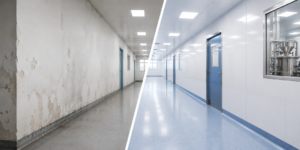

Choosing the right wall finish is an important decision for facilities where hygiene, durability, cleaning, and long-term maintenance matter. Hospitals, laboratories, pharmaceutical facilities, commercial kitchens, food-processing areas, schools, and other high-use environments place greater demands on wall surfaces than conventional offices or residential spaces.
Traditional options such as paint, ceramic tiles, and other decorative finishes may appear cost-effective at the beginning. However, their performance over time can depend heavily on cleaning frequency, moisture exposure, impact, surface damage, and ongoing maintenance.
This is where antibacterial wall cladding can offer a different approach. Instead of relying only on a conventional decorative finish, wall cladding can combine surface protection, cleanability, durability, and antimicrobial technology in a purpose-designed system.
Kleenclad provides hygienic wall and ceiling cladding solutions for environments where surface hygiene and long-term performance are important considerations. Its range includes antimicrobial PVC cladding systems designed for applications such as healthcare, food processing, laboratories, pharmaceutical facilities, and other demanding environments.
What Are Traditional Wall Finishes?
Traditional wall finishes can include painted plasterboard, ceramic tiles, wallpaper, decorative laminates, and other conventional surface treatments.
These materials are not inherently unsuitable for every application. In low-risk environments with limited moisture, impact, or cleaning requirements, they may perform adequately.
The challenge appears when the wall is exposed to demanding conditions every day.
A commercial kitchen may experience grease, steam, food splashes, and frequent washing. A hospital corridor may see constant movement of beds, trolleys, and equipment. A pharmaceutical facility may require controlled cleaning procedures and carefully maintained surfaces.
Under these conditions, the long-term performance of the wall finish becomes just as important as its initial appearance and installation cost.
What Is Antibacterial Wall Cladding?
Antibacterial wall cladding is a wall protection system designed to provide a durable and cleanable surface with technology intended to inhibit bacterial growth.
However, it is important to distinguish between antibacterial and antimicrobial terminology.
Antibacterial technology specifically addresses bacteria, while antimicrobial technology can target a broader range of microorganisms. Kleenclad’s current hygiene cladding range uses antimicrobial technology, and its K-Bio system incorporates silver-ion technology throughout the PVC material.
This distinction matters when selecting a wall system for environments where hygiene is a significant design consideration.
Antibacterial Wall Cladding vs Paint
Paint remains one of the most common wall finishes because it is familiar, relatively inexpensive to install, and available in a wide range of colours.
The problem is that painted walls can require ongoing maintenance, particularly in high-use environments.
Repeated cleaning, accidental impact, moisture, and everyday abrasion can lead to:
- Scuff marks
- Staining
- Peeling
- Scratches
- Surface deterioration
- Frequent touch-ups
- Repainting requirements
Paint can therefore become a recurring maintenance item.
By comparison, antibacterial wall cladding can provide a dedicated protective surface designed for demanding environments. Kleenclad’s hygiene cladding range is described as scratch-resistant, moisture-resistant, and designed to withstand rigorous daily cleaning and wear.
This does not mean cladding is automatically the best choice for every wall. The decision should be based on the environment, performance requirements, technical specifications, and lifecycle costs.
Antibacterial Wall Cladding vs Ceramic Tiles
Ceramic tiles are another common choice, particularly in wet areas and commercial kitchens.
Tiles can provide a durable and water-resistant surface, but the overall wall system includes more than the tile itself. Grout lines and joints need to be maintained, and damaged grout can become a recurring cleaning and repair concern.
In areas where frequent cleaning is required, the condition and detailing of joints can have a significant effect on maintenance.
Wall cladding can provide an alternative approach by using large-format sheets and, where specified, welded joints that create a more continuous surface.
Kleenclad states that its cladding systems can be installed with fully welded, watertight joints, helping create a seamless finish without the recurring grout maintenance associated with tiled walls.
Again, installation quality is critical. Even a high-performance panel system needs appropriate joint, corner, penetration, and substrate detailing to perform as intended.
Hygiene: Cleaning Alone vs Built-In Protection
One of the biggest differences between conventional wall finishes and antimicrobial cladding is the role of the material itself.
Cleaning removes contamination from a surface, but the surface material may still be exposed to microorganisms between cleaning cycles.
Antimicrobial cladding introduces an additional layer of passive surface protection.
Kleenclad’s K-Bio system uses silver-ion technology incorporated throughout the PVC material rather than relying only on a surface-applied treatment. The company states that this technology provides ongoing antimicrobial effectiveness throughout the product’s lifecycle.
This should not be interpreted as a replacement for cleaning or infection-control procedures. Antimicrobial wall cladding is a supplementary surface technology and should be used alongside the facility’s established cleaning, disinfection, hygiene, and contamination-control protocols.
Durability in High-Use Environments
Wall surfaces in busy facilities are regularly exposed to physical contact.
Beds, trolleys, carts, cleaning equipment, furniture, and other items can strike walls. Frequent movement can result in scratches, dents, and scuff marks.
When a conventional finish becomes damaged, repair may involve patching, sanding, repainting, or replacing sections.
Antibacterial wall cladding can provide a more robust protective surface for applications where impact and daily wear are important considerations.
Kleenclad’s product range includes systems designed for different performance requirements. For example, K-Guard is positioned as a heavy-duty anti-scratch wall cladding solution for high-traffic environments, while K-Bio is designed around antimicrobial protection for hygiene-critical applications.
The correct product should therefore be selected according to the specific environment rather than assuming that one cladding system is suitable for every application.
Maintenance and Lifecycle Costs
Initial purchase price is an important consideration, but it should not be the only factor in a wall-finish decision.
A cheaper material may require more frequent maintenance, repairs, repainting, grout renewal, or replacement.
For facilities that operate continuously, these maintenance activities can also create indirect costs through downtime and disruption.
Kleenclad’s current product information positions its hygiene cladding as a low-maintenance option, with a focus on durability and long-term surface performance.
When comparing wall finishes, facility owners should therefore consider:
- Initial material cost
- Installation cost
- Expected service life
- Cleaning requirements
- Repair frequency
- Replacement requirements
- Downtime during maintenance
- Compatibility with cleaning chemicals
- Long-term appearance
- Performance in the intended environment
This lifecycle approach provides a more realistic basis for comparing traditional finishes with wall cladding.
Where Antibacterial Wall Cladding Can Be Used
The suitability of antibacterial wall cladding depends on the product specification and the conditions of the intended space.
Potential applications include:
- Hospitals and healthcare facilities
- Operating theatres
- Laboratories
- Pharmaceutical manufacturing areas
- Cleanrooms
- Commercial kitchens
- Food-processing facilities
- High-traffic corridors
- Industrial environments
- Educational facilities
- Washrooms and changing areas
Kleenclad’s current hygiene cladding portfolio lists healthcare, food processing, laboratories, pharmaceutical facilities, commercial kitchens, manufacturing facilities, and other high-use environments among its applications.
Which Wall Finish Should You Choose?
There is no universal answer because different environments have different requirements.
Traditional paint may remain suitable for areas where cost and appearance are the primary considerations and cleaning or impact demands are relatively low.
Tiles can be appropriate for applications where their particular performance characteristics and design are suitable, provided grout and joint maintenance are properly managed.
However, where hygiene, frequent cleaning, moisture, impact, and long-term maintenance are major considerations, antibacterial wall cladding can provide a more purpose-built alternative.
The decision should be based on the actual conditions of the facility rather than simply comparing the price per square metre.
Why Consider Kleenclad?
Kleenclad focuses on hygienic wall and ceiling cladding solutions designed for demanding environments.
Its hygiene cladding range includes K-Bio, which combines antimicrobial protection with silver-ion technology, and other systems designed for specific durability, aesthetic, and environmental requirements.
The broader benefit of a cladding system is that hygiene and wall protection can be considered together. Instead of treating the wall finish purely as decoration, facility teams can evaluate cleanability, durability, moisture resistance, impact resistance, maintenance, and antimicrobial performance as part of one surface strategy.
For healthcare, pharmaceutical, food-processing, commercial kitchen, and other hygiene-sensitive projects, this approach can make the wall finish an active part of the facility’s long-term maintenance strategy.
Making the Right Wall-Finish Decision
Choosing between traditional finishes and antibacterial wall cladding should begin with the requirements of the environment.
Ask how frequently the walls will be cleaned, whether they will be exposed to moisture or chemicals, how much physical impact they are likely to receive, whether joints require special consideration, and how much maintenance the facility can realistically accommodate.
Traditional wall finishes can work well in appropriate applications. But where the environment demands higher levels of cleanability, durability, and surface protection, a specialist cladding system may provide greater long-term value.
With its range of hygienic and antimicrobial wall solutions, Kleenclad gives architects, contractors, facility managers, and business owners an option to consider when conventional wall finishes may not meet the demands of the environment.
The best choice is ultimately the one that balances hygiene, performance, maintenance, appearance, installation requirements, and total lifecycle cost—not simply the lowest initial price.
FAQs
1. What is antibacterial wall cladding?
Antibacterial wall cladding is a wall protection system designed to provide a durable, cleanable surface with antibacterial properties. It can be considered for hygiene-sensitive environments such as healthcare facilities, commercial kitchens, laboratories, pharmaceutical areas, and food-processing facilities.
2. How is antimicrobial wall cladding different from traditional wall finishes?
Antimicrobial wall cladding is designed to provide additional protection against microbial growth while also offering wall protection and cleanability. Traditional finishes such as paint and tiles primarily provide a decorative or protective surface and may require more frequent maintenance depending on the environment.
3. What are the benefits of antimicrobial cladding?
Antimicrobial cladding can combine hygienic surface technology with durability, cleanability, moisture resistance, and wall protection. Depending on the product, it can be suitable for areas where frequent cleaning and long-term surface performance are important.
4. Are antibacterial wall panels better than painted walls?
Antibacterial wall panels can be a better option than painted walls in high-use environments where frequent cleaning, moisture, impact, and hygiene are important considerations. However, the right choice depends on the facility’s specific requirements and the technical performance of the selected product.
5. Where can antibacterial wall cladding be used?
Antibacterial wall cladding can be considered for hospitals, laboratories, pharmaceutical facilities, cleanrooms, commercial kitchens, food-processing areas, manufacturing facilities, corridors, washrooms, and other environments where cleanable and durable wall surfaces are required.
6. Can antimicrobial wall cladding replace regular cleaning?
No. Antimicrobial wall cladding is not a replacement for regular cleaning and disinfection. It can provide an additional layer of surface protection, but facilities must continue following their established cleaning, hygiene, infection-control, and maintenance procedures.
7. Why choose antibacterial wall panels for healthcare facilities?
Antibacterial wall panels can be useful in healthcare environments because walls are exposed to frequent cleaning, equipment movement, moisture, and everyday wear. A suitable wall panel system can provide a durable, cleanable surface while supporting the facility’s overall hygiene strategy.
8. Is antimicrobial cladding suitable for commercial kitchens?
Yes, antimicrobial cladding can be considered for commercial kitchens where walls are exposed to food splashes, moisture, grease, frequent cleaning, and everyday impact. The selected product should be checked for suitability against the kitchen’s cleaning chemicals, temperature conditions, and installation requirements.
9. What should I consider when choosing antibacterial wall cladding?
When selecting antibacterial wall cladding, consider cleanability, antimicrobial performance, impact resistance, moisture resistance, chemical compatibility, fire performance, installation requirements, joint detailing, maintenance requirements, and the environmental conditions of the intended application.
10. Why choose Kleenclad antimicrobial wall cladding?
Kleenclad provides hygienic wall and ceiling cladding solutions designed for demanding environments. Its range includes antimicrobial wall cladding solutions intended for applications where hygiene, durability, cleanability, and long-term wall protection are important considerations.