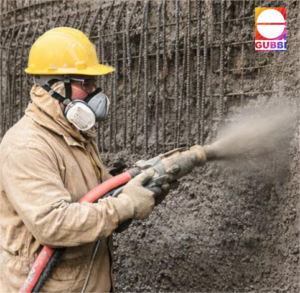

Guniting is a specialized concrete repair technique used to restore damaged surfaces, strengthen weak sections, and protect reinforcement in deteriorated structures. It involves spraying cementitious mortar or concrete onto a prepared surface at high velocity, creating a dense and well-bonded layer. Property owners, industrial facilities, infrastructure managers, and contractors often choose guniting when conventional concrete repair methods cannot provide the required coverage, adhesion, or application flexibility.
Why Are Professional Guniting Services Required?
When looking for guniting services, clients usually want more than a contractor who can spray mortar. They need an experienced team capable of inspecting the damaged area, identifying the cause, preparing the substrate, selecting suitable materials, controlling application quality, and completing the repair safely. Professional guniting contractors therefore combine technical assessment with skilled execution to achieve durable repairs in buildings, bridges, tunnels, basements, retaining structures, and industrial facilities.
Guniting is particularly useful where concrete has deteriorated because of corrosion, cracking, spalling, leakage, impact, or prolonged exposure to harsh conditions. The process can rebuild lost concrete sections and provide a protective cover over repaired reinforcement. Depending on project requirements, it can also be integrated with structural strengthening, waterproofing, corrosion treatment, and rehabilitation work. This makes guniting a practical solution for both localized repairs and larger restoration projects.
Where Is Guniting Used?
One major advantage of guniting work is its ability to cover irregular, vertical, overhead, and difficult-to-reach surfaces. Traditional concrete placement may require extensive formwork, access arrangements, and additional handling, especially when repairing soffits, beams, walls, shafts, or curved surfaces. With controlled spraying, the repair material can be placed directly onto the prepared substrate. This can improve application efficiency while reducing unnecessary formwork for suitable repair conditions.
The quality of a guniting project depends heavily on surface preparation. Before application begins, loose concrete, dust, laitance, rust, coatings, and other contaminants must be removed. Damaged concrete is carefully chipped back until a sound substrate is reached, while exposed reinforcement is cleaned and treated where required. The surface is then prepared to promote mechanical and chemical bonding. Poor preparation can cause debonding, hollow patches, cracking, and premature deterioration.
Concrete surface restoration becomes especially important when the existing substrate has extensive deterioration. Simply covering damaged concrete without removing weak material can trap defects beneath the new layer. Professional guniting work contractors assess the surface condition before spraying and determine how much concrete needs to be removed. This approach allows the repair material to bond properly with the existing structure and helps create a more durable finished surface.
Guniting for Reinforcement Corrosion
Reinforcement corrosion is one of the common reasons concrete structures require guniting work. When steel reinforcement corrodes, rust expansion creates internal pressure that can crack and break away the surrounding concrete. A proper repair must address the damaged reinforcement rather than simply covering the visible spalled area. Depending on site conditions, the repair sequence may include rust removal, reinforcement treatment, bonding measures, corrosion protection, and application of suitable repair mortar.
Shotcrete and guniting are often discussed together because both involve pneumatically projected cementitious material. In practical construction conversations, the terms may overlap, although application methods, material composition, equipment, and project specifications can differ. Clients searching for shotcrete contractors or guniting contractors should therefore evaluate the actual repair method proposed for their structure. The correct system should be selected according to substrate condition, thickness, access, strength requirements, and exposure environment.
Choosing the Right Guniting Contractors
For structural repair work, selecting the right guniting contractors is important because application quality directly influences long-term performance. An experienced contractor should understand substrate preparation, reinforcement treatment, material proportioning, spraying technique, layer thickness, curing, and quality inspection. They should also be able to coordinate with structural consultants when the repair affects load-bearing components. Choosing only on the basis of the lowest quotation can create greater costs when repairs fail or require repetition.
Guniting services can be used for repairing concrete columns, beams, slabs, walls, tanks, culverts, retaining structures, and other reinforced concrete components. The method becomes especially useful when sections have lost concrete cover or require rebuilding over reinforcement. For deeper structural damage, guniting may form one part of a wider strengthening system. The final repair approach should always be based on structural assessment rather than treating every damaged surface with the same solution.
Guniting for Industrial Structures
In industrial environments, guniting work contractors often face additional challenges such as restricted access, operating equipment, production schedules, chemical exposure, vibration, heat, and safety requirements. Repair work may need to be completed within a controlled shutdown window without affecting surrounding operations. A competent contractor plans access, surface preparation, material handling, spraying, curing, inspection, and housekeeping together. This organized approach helps minimize disruption while maintaining the required repair quality.
Industrial concrete repair often requires a carefully planned methodology because structures may operate under demanding conditions. Concrete exposed to chemicals, moisture, vibration, heat, or heavy equipment can deteriorate faster than conventional building elements. Guniting can help restore affected areas when the substrate is suitably prepared. However, material selection should consider the actual exposure environment, expected service conditions, structural requirements, and compatibility with the existing concrete.
Guniting for Basement and Underground Repairs
Guniting can also be considered for basement and underground concrete repairs where dampness, seepage, and difficult access make conventional methods complicated. However, visible leakage should not simply be covered without understanding its source. Water ingress may originate from joints, cracks, failed waterproofing, hydrostatic pressure, or drainage problems. A durable repair strategy should address the underlying cause first, followed by suitable concrete restoration and waterproofing measures where necessary.
For retaining walls and similar structures, concrete deterioration may result from moisture exposure, reinforcement corrosion, drainage deficiencies, freeze-thaw conditions in some climates, or long-term environmental attack. Guniting can restore damaged concrete and improve the protective cover after appropriate preparation. Drainage and waterproofing requirements should also be considered. Simply adding a new surface layer without resolving persistent moisture or structural movement can limit the service life of the repair.
Guniting Process: Step-by-Step
A professional guniting process generally starts with a detailed inspection and condition assessment. The team identifies cracks, delamination, exposed reinforcement, spalled concrete, voids, leakage points, and areas of weak substrate. Measurements and photographs can help document the existing condition before repair. Where necessary, engineers may recommend testing or structural evaluation. This information allows the contractor to define the repair sequence, material requirements, access arrangements, and quality-control procedures.
After inspection, the damaged concrete is removed using appropriate tools and methods. The objective is to eliminate unsound material without unnecessarily damaging the remaining concrete or reinforcement. Edges may be cut to suitable profiles, while exposed steel is cleaned and checked. The prepared surface is then cleaned thoroughly. Depending on the specification, bonding coats, primers, corrosion protection systems, or other compatible materials may be applied before guniting begins.
During guniting application, the operator controls the nozzle position, spraying angle, velocity, distance, and material flow to build a consistent layer. Proper technique helps reduce rebound, segregation, voids, and uneven thickness. The application may be completed in stages where greater thickness is required. Skilled nozzle operation is particularly important around reinforcement because inadequate encapsulation can leave pockets that compromise durability and create future corrosion risks.
High-velocity concrete application requires trained operators because spraying technique directly affects the density and bond of the finished layer. The nozzle should be handled consistently while maintaining appropriate distance and angle from the receiving surface. Material flow also needs to remain stable throughout the application. Poor technique can increase rebound and create uneven areas, making professional supervision essential for structural repair and rehabilitation projects.
Importance of Curing After Guniting
Curing is another important stage that should not be overlooked after guniting application. Cementitious repair materials require appropriate moisture and environmental conditions to develop their intended properties. The curing method and duration should follow the selected material system and project specification. Inadequate curing can increase shrinkage, surface cracking, and loss of performance. A contractor should therefore include curing protection within the work plan instead of treating it as an optional finishing activity.
Quality Control in Guniting Work
Quality control helps confirm that completed guniting work meets the project requirements. Depending on the repair specification, inspections may include surface checks, thickness verification, bond assessment, material testing, curing records, and visual examination for cracks, rebound pockets, or voids. Documentation of each stage provides useful evidence for project managers and owners. For critical structures, testing and acceptance criteria should be defined before work begins rather than after completion.
Durable structural rehabilitation depends on maintaining quality throughout every stage rather than focusing only on the final appearance. A smooth surface does not automatically indicate a successful repair. The substrate, reinforcement, material properties, application technique, thickness, bond, and curing process all contribute to performance. Proper inspection records and quality checks help identify defects early and provide greater confidence that the completed repair meets the intended technical requirements.
Guniting Services Cost
The cost of guniting services varies according to several factors, including the extent of deterioration, repair thickness, surface accessibility, reinforcement condition, material specification, equipment requirements, project location, working height, and safety arrangements. A per-square-foot rate alone may not provide an accurate estimate for complex repairs. Clients should request a detailed scope that explains preparation, reinforcement treatment, application, curing, testing, access, and finishing so quotations can be compared properly.
How to Select Guniting Contractors Near You
Searching for guniting contractors near me may help identify local service providers, but proximity should not be the only selection criterion. The contractor should have relevant experience with similar structural conditions, suitable equipment, trained operators, safety systems, and a clear quality-control process. Reviewing completed projects and understanding the proposed methodology can provide better confidence than relying solely on online ratings, low prices, or broad claims about general civil construction experience.
Guniting work contractors are commonly engaged for concrete rehabilitation where the existing structure needs restoration without extensive demolition. The method can reduce the need for large-scale formwork and can be adapted to complicated geometries. Nevertheless, it is not a universal repair solution. Active structural movement, severe section loss, unstable substrates, persistent water pressure, or major load deficiencies may require additional engineering measures before or alongside guniting.
Why Experience Matters in Guniting Work
For clients planning concrete repair, choosing an experienced specialist can make the overall process more predictable. A contractor should explain why guniting is recommended, what preparation is necessary, what material system will be used, how reinforcement will be treated, and how quality will be verified. For projects requiring dependable execution and coordinated structural rehabilitation, Gubbi Civil Engineers Limited can be considered when evaluating experienced teams for guniting and associated concrete repair requirements.
Long-Term Maintenance After Guniting
The long-term performance of guniting depends on more than the sprayed layer itself. The original cause of deterioration must be controlled, whether it involves reinforcement corrosion, water ingress, chemical exposure, inadequate drainage, cracking, or repeated mechanical damage. Maintenance inspections should continue after completion, particularly for structures exposed to aggressive environments. Early identification of new cracks, leakage, debonding, or corrosion can prevent small defects from becoming expensive structural repair problems.
When planning guniting work, property owners and facility managers should focus on durability, safety, and suitability rather than treating the method as a quick surface repair. A proper assessment, compatible repair materials, skilled application, adequate curing, and documented quality checks work together to deliver reliable results. By selecting qualified guniting services and addressing the underlying deterioration, clients can extend the useful life of concrete structures and reduce repeated maintenance costs.