

When travelers imagine Ethiopia, their minds often drift to the rock-hewn churches of Lalibela, the ancient obelisks of Axum, or the dramatic peaks of the Simien Mountains. However, to truly understand the pulse of Ethiopian daily life, you need to step inside its bustling traditional markets.
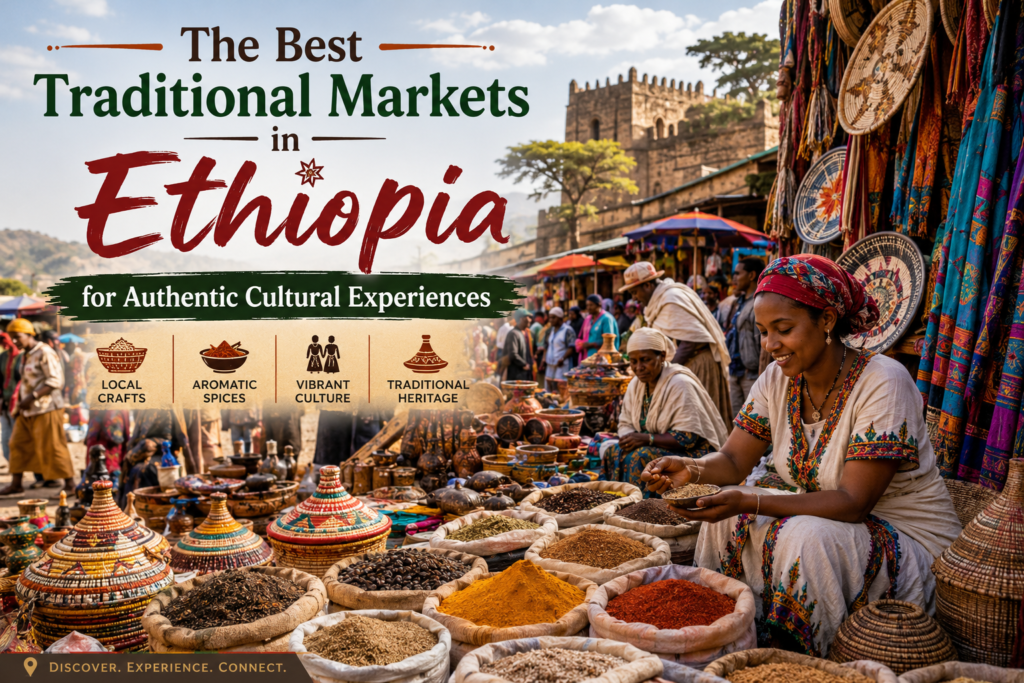
In Ethiopia, markets are far more than places to exchange money for goods. They are vibrant social hubs, cultural crossroads, and living museums. From the roaring trade of livestock between highland and lowland nomadic tribes to the fragrant spice alleys of ancient walled cities, visiting an Ethiopian market is an unforgettable sensory journey.
If you are planning an authentic trip to the Horn of Africa, here is your ultimate guide to the best traditional markets in Ethiopia and how to visit them hassle-free.
1. Addis Merkato (Addis Ababa): Exploring Africa’s Largest Open-Air Market
Located in the heart of the capital city, Addis Merkato (commonly known simply as Merkato) holds the title of Africa’s largest open-air market. Sprawling across several square kilometers in the western part of Addis Ababa, Merkato is an energetic universe of its own, employing thousands of vendors and attracting over 13,000 visitors daily.
What to Expect
Merkato is loosely organized into specialized zones (Saten Tera):
- Spice Market (Berbere Tera): Smells of freshly ground chili, cardamom, korarima, and fenugreek fill the air. Here, women pile mounds of fiery red berbere powder into neat pyramids.
- Coffee Alleys: Ethiopia is the birthplace of Arabica coffee. You can purchase raw or freshly roasted coffee beans directly from local merchants.
- Recycling & Metalwork (Korfe Tera): Local artisans transform discarded scrap metal, oil drums, and tires into household cookware, stoves, and tools—a masterclass in local sustainability.
Insider Tip
Because Merkato is vast and crowded, hiring a reputable local guide is strongly recommended. A guide will help you navigate the maze-like streets safely while explaining the cultural significance of the goods on display.
2. Shiro Meda Market (Addis Ababa): The Heart of Ethiopian Textiles and Fashion
If you are looking for authentic Ethiopian traditional attire, skip the modern boutiques and head straight to Shiro Meda Market, nestled at the foot of Mount Entoto in northern Addis Ababa.
The Highlight: Habesha Kemis
Shiro Meda is the undisputed center for hand-woven Ethiopian textiles. Here, weavers use wooden handlooms to create stunning garments, including:
- Habesha Kemis: The iconic white cotton dress worn by Ethiopian women during holidays, weddings, and church ceremonies, decorated with colorful woven borders (Tibeb).
- Netela: A delicate, multi-purpose woven white shawl wrapped around the shoulders.
- Gabi: A thicker, warmer cotton wrap ideal for cool highland evenings.
Watching the weavers skillfully maneuver threads on traditional looms right behind the shop stalls is a memorable cultural experience in itself.
3. Bati Market (Welo Region): Where Highland and Lowland Cultures Meet
Situated in northern Ethiopia between the central highlands and the arid Afar Depression, the Bati Market (held every Monday) is arguably one of the most culturally fascinating gatherings in East Africa.
A Cultural Melting Pot
What makes Bati unique is its geographic and cultural location. Every Monday, thousands of people travel on foot, by donkey, or leading camel caravans to converge here. You will see three distinct ethnic groups trading together:
- The Afar people: Nomadic pastoralists from the eastern desert lowlands, often carrying traditional curved knives (Gile).
- The Oromo people: Agriculturalists and traders from the surrounding hills.
- The Amhara people: Highland farmers selling grain, spices, and pottery.
The most dramatic scene at Bati is the camel and cattle market set in a dusty amphitheater, where hundreds of camels are bargained over using ancient hand-gestures and negotiation techniques.
4. Harar Jugol Markets: Spices, Silver, and Ancient Walled City Charm
The eastern city of Harar Jugol is a UNESCO World Heritage site known as the fourth holiest city in Islam. Within its historic 16th-century stone walls lie narrow alleyways filled with vibrant street markets.
Key Markets in Harar:
- Gidir Magala (The Big Market): Located at the central square, this market offers fresh produce, aromatic spices, and local bread (Ambasha).
- Makina Girgir (Tailors’ Street): Named after the rhythmic sound of treadle sewing machines, this narrow alley is filled with tailors stitching colorful fabrics on the spot.
- Jewelry & Basketry Markets: Harar is famous for exquisite silver jewelry, horn craft work, and intricately patterned hand-woven baskets (Gar), which local women use to decorate the interior walls of traditional Harari homes.
5. Key Afer and Dimeka Markets (South Omo Valley): Tribal Gatherings of the South
For travelers journeying into southern Ethiopia’s Omo Valley, weekly traditional markets offer a rare glimpse into the lives of indigenous tribal communities.
Key Afer Market (Thursdays)
Located near Jinka, Key Afer brings together members of the Benna, Tsemai, Ari, and Hamer tribes. Visitors can observe locals trading dried gourds, butter, sorghum, honey, and traditional wooden neckrests (Borkoto).
Dimeka Market (Saturdays)
Dimeka is the principal market town for the Hamer people. Hamer women are famous for their signature braided hairstyle colored with red ochre and resin, as well as elaborate beaded skirts and brass wristbands.
Note for Travelers: Always ask for permission before taking photographs in tribal markets, as photography fees are standard in the Omo Valley.
Practical Tips for Visiting Traditional Markets in Ethiopia
To make the most of your market exploration, keep these practical tips in mind:
- Carry Cash (Ethiopian Birr): Market vendors do not accept credit cards or digital payments. Carry small denominations of Ethiopian Birr for easy transactions.
- Learn Basic Amharic Phrases: A simple “Amesegenallo” (Thank you) or “Sinte new?” (How much is it?) goes a long way in building friendly rapport.
- Respect Local Customs: Dress modestly, particularly when visiting markets in religious or traditional regions like Harar or Welo.
- Secure Your Travel Documents Early: Before embarking on your journey to experience Ethiopia’s rich culture, make sure to apply for your Ethiopia tourist visa well in advance so you can travel with complete peace of mind.
Plan Your Trip to Ethiopia Hassle-Free
Exploring the colorful markets of Addis Ababa, Harar, and the Omo Valley starts with securing your entry clearance. Thanks to Ethiopia’s modern electronic portal, obtaining an Ethiopia eVisa online is easier and faster than ever before.
Whether you are traveling for leisure, cultural exploration, or photography, having expert support ensures your entry application is handled seamlessly without unnecessary delays.
Why Choose Us for Your Ethiopian Visa?
Planning an international trip should be exciting, not stressful. Here is why thousands of travelers trust our visa assistance services:
- Reliable Travel Visa Services: Our proven global track record has assisted numerous travelers worldwide in successfully obtaining their official Ethiopia e-Visa without complications.
- Round-the-Clock Assistance: Have questions about visa requirements or processing times? Reach out to our dedicated support team 24/7, and our experts will respond within 72 hours with precise guidance.
- Experienced Visa Consultants: Avoid costly application errors or delays. Receive expert guidance from seasoned visa specialists to ensure your documentation meets all official standards for guaranteed acceptance.
- Efficient Visa Application Process: Don’t waste time on complex paperwork. Apply for your visa in minutes using our simplified, user-friendly online application form.
Ready to experience the vibrant sounds, flavors, and colors of Ethiopia’s traditional markets?