
Walk down any oil aisle, and you will see three price tiers staring back at you. Conventional sits at the bottom, full synthetic at the top, and synthetic blend engine oil holds the middle ground. Most drivers assume the middle option is just a marketing trick. It is not. A blend is a real formulation choice with real strengths, and for a large share of vehicles on the road today, it is the smarter buy.
This article explains how blends are built, which engines benefit most, and how to tell whether your vehicle needs one. No hype. Just the practical detail that helps you spend your money well.
What Synthetic Blend Engine Oil Actually Is
A blend mixes conventional base oil with synthetic base stock, then adds the same additive package you would find in a premium product. The ratio varies by manufacturer. There is no legal standard that says a blend must contain a set percentage of synthetic.
How the base oils differ
Conventional oil comes from refined crude. The molecules vary in size and shape, which means some of them break down faster under heat. Synthetic base stock gets built through chemical processing, so the molecules stay uniform. Uniform molecules resist oxidation better and flow more predictably when temperatures swing.
Mixing the two gives you part of that stability at a lower cost. You get better cold starts than conventional oil offers and stronger resistance to thermal breakdown, without paying full synthetic prices. Please visit here to learn more about the best lubricants.
Additives do the heavy lifting
Base oil is only part of the story. Detergents keep deposits from forming on pistons. Dispersants hold soot and sludge in suspension. Anti-wear agents protect cam lobes and lifters during startup, when metal briefly touches metal. Viscosity modifiers keep the film thickness steady as the engine warms up.
A well-formulated blend with a current additive package will outperform a cheap full synthetic with a weak one. Judge the product by its specification, not by the word on the front label.
Where Synthetic Blend Engine Oil Fits Best
Some vehicles genuinely need full synthetic. Turbocharged direct injection engines, high-revving sports cars, and anything with an extended drain interval usually fall into that group. Plenty of other vehicles do not.
Synthetic blend engine oil suits these situations well:
- Pickup trucks and SUVs that tow moderate loads on weekends
- Commuter vehicles with 60,000 miles or more on the clock
- Older engines that consume a little oil between changes
- Delivery vans running stop-and-go routes in mild climates
- Any vehicle where the manual calls for a specification a blend already meets
That last point matters most. If your manual asks for API SP and SAE 5W-30, a blend carrying those marks meets the requirement. Paying more does not buy you protection the engine was never designed to use.
Reading the Label Before You Buy
Two markings tell you almost everything you need.
The viscosity grade appears as something like 5W-30. The number before the W describes cold flow. Lower means the oil moves faster on a freezing morning, which is when most engine wear happens. The number after describes thickness at operating temperature.
The API donut on the back tells you which performance standard the oil meets. For gasoline engines, API SP is the current category. It was introduced in 2020 and added protection against low-speed pre-ignition, a knock problem that affects small turbocharged engines. For heavy-duty applications, diesel engine oil typically carries API CK-4 instead, along with a higher detergent reserve to handle soot and acid.
Match those two markings to your manual, and you have done the important part.
Common Myths Worth Clearing Up
You cannot switch back to conventional after using synthetic. You can. Oils of the same grade mix freely. Nothing in the chemistry prevents it.
Blends cause leaks in old engines. Leaks come from hardened seals, not from base oil type. If a seal is already brittle, any fresh oil with active detergents may reveal the problem that was already there.
Darker oil means worn-out oil. Color tells you the dispersants are working. Mileage, engine behavior, and time since the last change tell you far more.
Habits That Protect Your Oil Investment
Good oil still fails early when the basics get ignored. These steps cost almost nothing.
- Replace the filter at every change. A clogged filter opens its bypass valve and sends unfiltered oil to the bearings.
- Check the level every second or third fuel stop. Low oil overheats faster and oxidizes sooner.
- Keep the air filter clean. Dust that gets past it ends up in the sump.
- Top up with the same grade you already have in the engine.
- Fix coolant leaks quickly. Even a small amount of coolant in oil creates sludge.
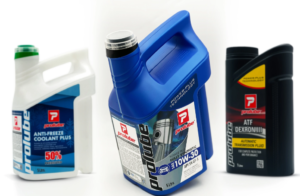
Fleets that track these habits often stretch service life well beyond the average, no matter which tier of oil they buy. Pro-Lube designs its blend range around that reality, marking every specification clearly on the bottle so the person doing the service does not have to guess.
When to Step Up to Full Synthetic
There are clear cases where a blend is not the right answer.
- Your manual specifically requires full synthetic
- You tow heavy loads through summer heat on a regular basis
- Your climate drops below freezing for months at a time
- You run extended drain intervals backed by oil analysis
- Your engine uses a turbocharger with an oil cooled bearing housing
In those conditions a true performance engine oil earns its price. The thermal stability keeps the film intact when temperatures spike, which is exactly when a thinner conventional base would start to break down.
Final Thoughts
Choosing synthetic blend engine oil is a practical decision, not a compromise. Read your manual, match the viscosity grade and API category, then buy the product that meets those marks from a supplier you trust. That approach protects the engine and respects your budget at the same time.
The gap between a good blend and a good performance engine oil is smaller than the price difference suggests for most everyday driving. Spend the savings on more frequent changes and better filters. Your engine will notice the difference far more than it notices the label.
Frequently Asked Questions
How often should I change synthetic blend oil?
Follow the manual interval as your starting point. Shorten it if you drive short trips, idle heavily, or spend time on dusty roads. Short trips are harder on oil than long highway runs because the engine never fully burns off moisture.
Can I mix a blend with full synthetic?
Yes, as long as the viscosity grade and API category match. Mixing dilutes the stronger product slightly, so treat it as a top-up solution rather than a plan.
Does a blend protect a turbocharged engine?
It can, if the manufacturer approves that specification. Turbo bearings run very hot after shutdown, so check the manual carefully before deciding.
Is a blend suitable for diesel pickups?
Only when it carries the correct heavy-duty category. A quality diesel engine oil needs a much larger detergent and dispersant reserve than a gasoline formula provides.
What happens if I use the wrong viscosity?
Too thick and the oil struggles to reach the top end on cold starts. Too thin and the film may not hold under load. Both raise wear, so stay with the grade your engine was designed around.