
Have you ever wondered how the honey sitting in your kitchen cupboard made its way from a flower to your breakfast table? If you have searched for what is raw honey, you may be surprised by the fascinating journey behind every jar.
Raw honey is the result of a natural process involving flowers, honey bees, beekeepers, and careful harvesting. From the moment a bee collects nectar to the time you drizzle honey over your breakfast, there are several important steps involved.
In this guide, we will follow the journey of raw honey from the flower and beehive to your kitchen.
What Is Raw Honey?
Raw honey is honey that has been harvested from beehives and handled with minimal processing.
After extraction, it is generally strained to remove larger particles such as pieces of beeswax and other natural hive debris. It is then placed into containers for storage and consumption.
Because it undergoes minimal processing, raw honey can retain a naturally distinctive colour, aroma, flavour, and texture.
Its characteristics can vary depending on the flowers visited by bees and the region where the honey was produced.
Step 1: Bees Visit Flowers
The journey of raw honey begins with flowering plants.
Honey bees travel from flower to flower collecting nectar. Nectar is a naturally sweet liquid produced by flowers to attract pollinators.
As bees move between flowers, they collect nectar and carry it back to their hive.
This simple action is the first step in the creation of honey.
Step 2: Bees Bring Nectar Back to the Hive
Once a honey bee has collected enough nectar, it returns to the hive.
The nectar is stored temporarily in a special part of the bee’s body called the crop, sometimes known as the honey stomach.
The bee then passes the nectar to other worker bees inside the hive.
This is where the transformation from nectar into honey begins.
Step 3: Nectar Is Naturally Transformed
Inside the hive, bees work together to transform the collected nectar.
Enzymes help change the composition of the nectar, while the bees also use evaporation to reduce its water content.
The bees repeatedly move the nectar around, helping it develop the thick consistency associated with honey.
Once the honey reaches the right stage, it is stored inside the honeycomb.
Step 4: Honey Is Stored in the Honeycomb
Bees place the developing honey into the individual cells of the honeycomb.
The honeycomb acts as a natural storage system inside the hive.
When the honey is ready, bees seal the cells with a thin layer of beeswax.
This protects the stored honey until it is needed by the colony.
Beekeepers carefully monitor the hives and harvest honey when the appropriate conditions are met.
Step 5: Beekeepers Harvest the Honey
The next stage involves the beekeeper.
Honey-filled frames are carefully removed from the hive.
The beeswax covering the honeycomb cells is then removed so the honey can be extracted.
Beekeepers use different methods to remove honey from the comb, depending on their equipment and production practices.
The goal is to collect the honey while taking care of the bee colony and maintaining good beekeeping practices.
Step 6: The Honey Is Extracted
Once the honeycomb has been opened, the honey can be extracted.
Many beekeepers use a honey extractor, which uses centrifugal force to remove honey from the comb.
The extracted honey is then collected in a container.
At this stage, the honey is still very close to its natural form.
Step 7: Raw Honey Is Strained
After extraction, raw honey is typically strained.
This helps remove larger particles such as:
- Beeswax
- Small pieces of hive debris
- Other visible impurities
The process is generally much less intensive than the fine filtration used for some commercially processed honey products.
This allows raw honey to maintain many of its natural characteristics.
Step 8: Honey Is Stored and Packaged
Once the honey has been strained, it can be placed into clean containers.
Depending on the producer, the honey may be packaged in jars or other suitable food-safe containers.
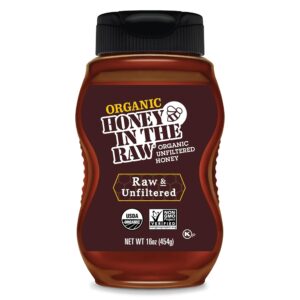
The label may provide information about the product, its origin, and the brand.
For consumers, checking this information can help them understand what they are buying.
Step 9: Raw Honey Reaches Your Kitchen
After packaging, the honey is ready to make its way to shops and consumers.
You might purchase a jar from a local store, an online retailer, or directly from a honey producer.
Eventually, it arrives in your kitchen, ready to be enjoyed.
You can drizzle it over breakfast, add it to drinks, or use it in your favourite recipes.
This entire journey connects your kitchen to flowers, bees, beekeepers, and the natural environment.
Why Does Raw Honey Look Different?
One of the interesting characteristics of raw honey is that it does not always look exactly the same.
Depending on its floral source and processing, raw honey may be:
- Pale yellow
- Golden
- Amber
- Dark brown
- Clear
- Cloudy
These differences are natural and can make each variety unique.
The flavour can also change depending on the flowers visited by the bees.
Why Does Raw Honey Crystallise?
After reaching your kitchen, raw honey may eventually crystallise.
This is a natural process caused by the formation of sugar crystals.
Some types of honey crystallise quickly, while others remain liquid for longer.
Crystallised honey is not necessarily spoiled. Many people enjoy its thick, spreadable texture.
If you prefer liquid honey, gently warming the jar can help soften the crystals.
How Should You Store Raw Honey?
Once your jar arrives in the kitchen, proper storage is simple.
Keep the honey:
- In a tightly sealed container
- In a cool, dry place
- Away from direct sunlight
- Away from excessive heat
There is generally no need to refrigerate honey.
Using a clean and dry spoon when serving honey can also help maintain its quality.
How Can You Enjoy Raw Honey?
There are countless ways to enjoy raw honey.
Try adding it to:
- Tea
- Porridge
- Yogurt
- Granola
- Pancakes
- Waffles
- Smoothies
- Toast
- Homemade salad dressings
You can also use it as an ingredient in baking and cooking.
The possibilities are almost endless.
The Natures Oasis Journey
At Natures Oasis, the natural character of honey is part of what makes the product special.
Understanding the journey of raw honey helps you appreciate that every jar represents a process that begins with flowers and bees before eventually reaching your kitchen.
From the first collection of nectar to careful harvesting and packaging, raw honey has a story behind every spoonful.
A Note About Honey Safety
Honey should not be given to babies under 12 months of age because of the risk of infant botulism.
Older children and adults can enjoy honey as part of a balanced diet, keeping in mind that honey is still a source of natural sugars.
Final Thoughts
So, what is raw honey and how does it reach your kitchen?
The journey begins when honey bees collect nectar from flowers. The nectar is then naturally transformed inside the hive, stored in honeycomb, harvested by beekeepers, extracted, lightly strained, and finally packaged.
By the time a jar of raw honey reaches your kitchen, it has completed a remarkable journey from flowers to hive and from hive to home.
Whether you enjoy it in your morning tea, drizzle it over breakfast, or use it in homemade recipes, raw honey offers a delicious way to experience the natural character of honey.
With a quality product from Natures Oasis, you can bring a little piece of this fascinating journey into your own kitchen.