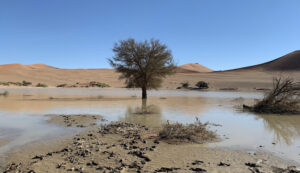

Imagine a place where massive, golden desert dunes slide directly into the freezing, crashing waves of the Atlantic Ocean. Picture a shoreline cloaked in thick, ghostly fog, littered with the rusting remains of ancient ships and the bleached bones of whales.
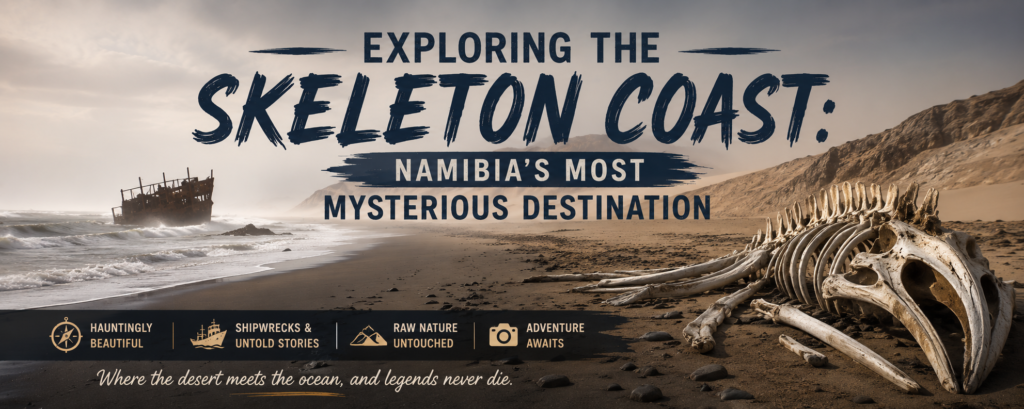
This is the Skeleton Coast of Namibia.
Often described as one of the most remote and untamed places on Earth, this stretch of coastline has fascinated explorers, sailors, and adventurous travelers for centuries. If you are looking for a destination that feels entirely otherworldly, raw, and untouched by modern commercialism, this is it.
In this guide, we will answer the most common questions about the Skeleton Coast to help you plan an unforgettable journey to the edge of the world.
What is the Skeleton Coast and why is it called that?
The Skeleton Coast is a 500-kilometer (310-mile) stretch of coastline in northwestern Namibia, running from the Ugab River up to the Kunene River at the Angolan border.
Its ominous name comes from two main sources:
- Animal Bones: During the height of the whaling industry, the beaches were littered with thousands of massive whale skeletons and seal bones. The indigenous Ovahimba people even used these giant whale ribs to construct their shelters.
- Shipwrecks: The treacherous currents, wild winds, and blinding fog made this coastline a massive ship cemetery. Hundreds of ships have met their end here, leaving their rusting iron hulls half-buried in the desert sands.
Indigenous San people once called this region “The Land God Made in Anger,” while Portuguese sailors feared it as “The Gates of Hell.” Once a ship ran aground here, the crew might survive the wreck, only to find themselves trapped in a hyper-arid desert with no food or water.
Where is the Skeleton Coast located?
The Skeleton Coast is situated on the Atlantic side of Namibia, in the southwest region of Africa. It forms part of the larger Namib Desert, which is the oldest desert in the world.
To give you a better mental map, the southern entry point is roughly a 1.5-hour drive north of the popular coastal tourist town of Swakopmund.
Do you need a visa to visit Namibia?
Yes, depending on your nationality, you may need a visa to enter Namibia. While citizens from countries like the US, Canada, the UK, Australia, and many EU nations can enter visa-free for up to 90 days, travelers from many other countries must obtain a visa before they arrive.
Fortunately, Namibia now offers a streamlined electronic visa system (eVisa), which saves you from long lines at the embassy or stressful paperwork at border crossings.
To ensure a smooth journey without any paperwork headaches, we are here to help.
Why Choose Us for Your Namibia Visa?
- Reliable Travel Visa Services: Our global approach has successfully assisted countless travelers in securing their official visas.
- Round-the-Clock Assistance: Reach out to us 24/7. Our visa experts are always ready to assist and will respond within 72 hours.
- Experienced Visa Consultants: Get personalized, expert guidance to ensure your application meets all requirements and avoids rejection.
- Efficient Visa Application Process: Apply for your visa in just a few minutes using our simplified, user-friendly online form.
Before booking your flights, check your eligibility and start your application today at the Namibia eVisa Eligible Countries.
How do you get to the Skeleton Coast?
The primary starting point for any Namibian adventure is Hosea Kutako International Airport, located just outside the capital city of Windhoek.
Once you land in Windhoek, you have two main options to reach the Skeleton Coast:
- By Road: You can rent a 4×4 vehicle and drive to Swakopmund (about 4 hours), then head north along the salt-paved C34 highway toward the park gates.
- By Air (Fly-In Safaris): Because the northern reaches of the park are highly restricted, many high-end lodges offer fly-in safaris using small charter planes. This gives you a breathtaking, bird’s-eye view of the shipwrecks and dunes.
Can you drive yourself through the Skeleton Coast?
Yes, but only in the southern section. The Skeleton Coast is divided into two parts:
- The Southern Section (Accessible): This area stretches from the Ugab River gate to Torra Bay. You can explore this part on a self-drive trip. You will need to buy an entry permit at either the Ugab River Gate (south) or the Springbokwasser Gate (east). Make sure to arrive before the gates close in the afternoon!
- The Northern Section (Restricted): The wilder, northern half of the National Park is a protected wilderness area. You cannot drive here on your own. It can only be accessed if you are booked with a licensed tour operator who holds a special concession, or if you fly into one of the exclusive lodges.
What are the famous shipwrecks to see on the Skeleton Coast?
While many of the older wooden ships have been completely swallowed by the sand and sea, there are still several incredible wrecks you can see:
- The Zeila: This is the most accessible shipwreck on the coast. Located just south of Henties Bay, it is very close to the shore and easily visible from the beach. It ran aground in 2008 and has become a favorite nesting spot for sea birds, making it a dream for photographers.
- The Eduard Bohlen: This is the legendary “desert shipwreck.” It ran aground in 1909 in thick fog. Over the past century, the shifting sand dunes have moved the shoreline outward. Today, the rusted skeleton of the ship lies completely stranded in the middle of the desert, about 400 meters inland! It can only be visited via an organized 4×4 tour or viewed from a scenic flight.
- The South West Seal: A 90-tonne fishing vessel that caught fire and ran aground in 1976. Its decaying wooden hull sits right on the shoreline.
What wildlife lives in the Skeleton Coast?
You might think a place with such a harsh climate would be entirely empty, but the Skeleton Coast is surprisingly full of life. The cold, nutrient-rich Benguela Current feeds a massive marine ecosystem, which in turn supports land predators.
Here is what you might spot:
- Cape Fur Seals: At the Cape Cross Seal Reserve, you will find one of the largest colonies of Cape fur seals in the world. Up to 100,000 seals gather here, filling the air with their loud calls (and a very strong smell!).
- Desert-Adapted Elephants & Lions: These incredible animals have adapted to survive without drinking water for days, getting their moisture from the plants they eat or the sea mist. They roam the dry riverbeds that cut through the desert.
- Brown Hyenas and Black-Backed Jackals: These cunning predators patrol the beaches, especially near the seal colonies, looking for an easy meal.
What is the best time of year to visit the Skeleton Coast?
The Skeleton Coast can be visited all year round, but the experience changes depending on the season:
- May to October (Dry, Winter Months): This is generally considered the best time to visit. The temperatures are cooler, skies are clearer, and it is much easier to spot wildlife gather around waterholes in the interior.
- November to April (Warm, Summer Months): This is the wet season for the rest of Namibia, but on the coast, it brings warmer temperatures and much heavier, atmospheric fog. If you want to experience the eerie, moody vibe that made the coast famous, this is a great time.
Is the Skeleton Coast dangerous for tourists?
For tourists on guided tours or well-planned self-drives, the Skeleton Coast is highly safe. The “danger” lies in the harsh environment if you are unprepared.
To stay safe, keep these golden rules in mind:
- Never drive on the dunes: Stick strictly to marked tracks. Shifting sand can easily trap even the best 4×4 vehicles.
- Watch the road surface: The coastal road is made of salt and sand. When the wet sea fog rolls in, this surface can become as slippery as black ice.
- Carry extra supplies: Always carry plenty of drinking water, food, extra fuel, and at least one good spare tire. Cell service is non-existent in most parts of the park.
Where can you stay near the Skeleton Coast?
Because the park is a protected wilderness, accommodation options are highly exclusive and limited to prevent environmental damage:
- Shipwreck Lodge: Located inside the national park, this luxury lodge features unique cabins designed to look like the shipwrecks scattered along the beach. It offers unparalleled views of the dunes and the sea.
- Cape Cross Lodge: A beautiful, comfortable option located right near the famous seal colony, offering great ocean views.
- Terrace Bay Resort: A budget-friendly, simple government-run resort inside the park that is incredibly popular with fishermen.
What should you pack for a trip to the Skeleton Coast?
Because of the unique clash between the hot desert and the freezing Atlantic, the weather here is highly unpredictable. Pack the following essentials:
- Warm Layers: Even in mid-summer, the ocean wind and thick morning fog can make the coast freezing cold. Bring a windproof jacket and sweaters.
- Sun Protection: The desert sun is intense. High-SPF sunscreen, a wide-brimmed hat, and polarized sunglasses are non-negotiable.
- Closed Shoes: The sand can get incredibly hot during the day, and gravel areas can be sharp.
- Binoculars and Camera: Crucial for spotting distant shipwrecks, seals, and desert-adapted wildlife.
Ready to start your adventure?
The Skeleton Coast is more than just a travel destination; it is an experience that humbles you. Standing on a silent, fog-covered beach with the Atlantic crashing in front of you and the ancient Namib Desert rising behind you is a feeling you will never forget.
Ensure your travel documents are fully secured so you can focus entirely on the journey. Apply for your Namibia eVisa today and prepare to step into one of the last true wildernesses left on our planet!