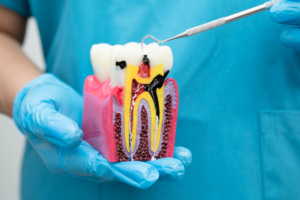

Not every toothache means a root canal, and not every twinge of sensitivity is harmless. The challenge is telling the two apart — and knowing when a simple filling will do versus when the infection has gone deeper.
Sensitivity vs. Pain: Understanding the Difference
Tooth sensitivity is usually a brief, sharp reaction to triggers like cold drinks or sweet foods, fading within seconds. Pain, on the other hand, tends to linger, intensify with pressure, or appear without any clear trigger at all.
This distinction matters because sensitivity often points to worn enamel or minor gum recession, while persistent pain more often signals something happening inside the tooth itself.
When Sensitivity Is Just Sensitivity
Mild, short-lived sensitivity is common and doesn’t automatically mean trouble. It can stem from:
- Slightly worn enamel from years of normal wear
- Minor gum recession exposing the tooth’s root surface
- Recent whitening treatments causing temporary reactivity
- A newly placed filling still settling in
In these cases, a desensitising toothpaste and time are often enough to resolve things.
When It’s More Than Sensitivity
The picture changes when certain patterns show up. Pain that lasts well beyond the initial trigger, discomfort when biting down, or pain that wakes you up at night are signs the issue has likely reached the tooth’s inner pulp rather than just the surface.
If left unaddressed, what starts as a localised problem can progress into an infected tooth root, where bacteria reach the nerve tissue and surrounding bone.
The Role of Pulp Infection
At the centre of most root canal cases is a deeper issue: dental pulp infection. Once bacteria breach the protective layers of enamel and dentin, they reach the soft tissue inside the tooth, triggering inflammation that the body can’t resolve on its own.
This is the point where over-the-counter pain relief stops being a real solution — it manages symptoms temporarily while the underlying infection continues to progress.
A Simple Self-Check Before Booking an Appointment
While only a dentist can give a definitive diagnosis, these questions can help you gauge urgency:
- Does the pain linger for more than a few seconds after a trigger?
- Is there pain specifically when biting or chewing?
- Have you noticed any swelling or a bump on the gum?
- Has the tooth changed colour recently?
- Is the pain interfering with sleep or daily activities?
Answering “yes” to two or more of these is a reasonable signal to book a dental visit soon rather than waiting it out.
How Dentists Confirm the Diagnosis
A dental visit for these symptoms typically includes a visual exam, gentle tapping or pressure tests on the tooth, and an X-ray to check for infection at the root tip or bone changes around it. This combination usually gives a clear answer on whether a filling, a root canal, or further monitoring is the right path.
Why Waiting Rarely Helps
It’s tempting to hope persistent discomfort will simply fade, but pulp infections don’t resolve without treatment. Waiting typically means:
- The infection spreads further into surrounding bone
- Pain becomes more frequent and intense
- Treatment becomes more complex and time-consuming
- The risk of losing the tooth increases significantly
Getting an Accurate Diagnosis Locally
If your symptoms match the patterns above, getting evaluated for painless root canal treatment in dombivli sooner rather than later typically means a more straightforward treatment process with less discomfort overall, despite the name suggesting otherwise.
Why Modern Treatment Is Far More Comfortable Than Its Reputation Suggests
Advances in anaesthesia and technique have made root canal treatment far more comfortable than its old reputation suggests. Most patients are surprised at how manageable the actual appointment feels compared to the anxiety leading up to it.
Choosing a Clinic You Trust
A clear, honest diagnosis matters as much as the treatment itself. Dazzling Dents Clinic takes the time to walk patients through exactly what an X-ray shows and why a particular treatment is recommended, rather than rushing straight to a procedure.
If your symptoms have already progressed and you’re wondering what happens next if treatment is postponed, the final part of this series covers what happens if you delay root canal treatment in detail.
Frequently Asked Questions
1. How do I know if my tooth pain needs urgent attention?
Pain that lingers, worsens with pressure, or disturbs sleep is generally a sign to seek evaluation within a few days.
2. Can sensitivity turn into something more serious if ignored?
In some cases, yes, especially if the underlying cause is decay progressing toward the pulp rather than simple enamel wear.
3. Is an X-ray always necessary to diagnose the problem?
Yes, X-rays reveal infection or bone changes that aren’t visible during a standard visual exam.
4. Does pain always accompany a pulp infection?
Not always — some infections are detected only through routine imaging, without the patient feeling significant pain.
5. What’s the first step if I suspect I need a root canal?
Booking a dental consultation for an exam and X-ray is the most reliable way to get a clear answer.
Final Thoughts
Telling sensitivity apart from a deeper problem isn’t always obvious, which is exactly why a professional evaluation matters. Catching the difference early keeps treatment simple and protects your natural tooth.
Dealing with persistent tooth pain? Book a consultation to get a clear diagnosis and treatment plan.
source:- 10 Warning Signs of RCT