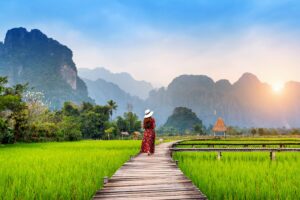

Planning a trip to Laos is not just about visiting ancient temples or hiking through lush jungles. To truly understand this beautiful landlocked country, you need to experience its festivals.

Known locally as “Boun,” Lao festivals are closely tied to the agricultural calendar, Buddhist traditions, and ancient spirit worship. They are lively, colorful, and deeply spiritual. Most importantly, local communities welcome travelers to join in the celebrations with open arms.
Here is a guide to the most incredible traditional festivals in Laos that you should add to your travel bucket list.
Why are traditional festivals in Laos so special?
Festivals in Laos are not staged performances for tourists. They are an authentic part of daily life. When you attend a festival here, you are standing alongside local families as they pray, feast, dance, and laugh.
Most of these celebrations combine Theravada Buddhism with older animist traditions (the worship of spirits, or phi). This blend creates a unique cultural atmosphere where quiet, sacred temple rituals easily transition into loud, joyful street parties.
What is the most famous festival in Laos?
The most famous and widely celebrated festival in Laos is Boun Pi Mai, the Lao New Year. It takes place in mid-April, usually from April 14th to 16th.
Because April is the hottest month of the year, this festival is also a massive nationwide water celebration. It marks the transition from the dry season to the rainy season, symbolizing renewal, cleansing, and a fresh start for the upcoming year.
How is the Lao New Year (Boun Pi Mai) celebrated?
If you visit Laos during Boun Pi Mai, prepare to get wet! The festival lasts for three official days, but the partying often goes on for a full week.
Here are the main activities you will experience:
- Water Splashing: People of all ages splash water on each other in the streets. This is not just to cool down; the water is believed to wash away bad luck and misfortunes from the past year.
- Bathing Buddha Statues: Locals visit temples to wash Buddha images with water perfumed with flowers and wild turmeric.
- Sand Stupas: Along the banks of the Mekong River, families build beautiful stupas out of sand to make spiritual merit.
- The Queen of Spring Parade: In the UNESCO World Heritage town of Luang Prabang, a massive parade features the “Nangsangkhane” (the Queen of Spring), who is chosen through a traditional beauty pageant and paraded through town on a brightly decorated float.
What is the Rocket Festival (Boun Bang Fai) in Laos?
Taking place around May or June, Boun Bang Fai is one of the most boisterous and fun-filled festivals in Southeast Asia. This ancient, pre-Buddhist rain-making ritual is celebrated to ask the gods for rain before the rice planting season begins.
Different villages build massive, homemade rockets out of bamboo and PVC pipes, filling them with gunpowder. On the day of the festival, communities gather in open fields to launch these rockets into the clouds.
There is plenty of music, dancing, and local food. The festival also has a competitive edge: the team whose rocket flies the highest wins ultimate bragging rights, while the team with a failed rocket is playfully thrown into the mud!
Why do Lao people celebrate Boun That Luang in Vientiane?
Boun That Luang is the most important religious festival in the country. It is held over three days during the full moon of the 12th lunar month (usually November) at the golden Pha That Luang stupa in the capital city, Vientiane.
The stupa is the national symbol of Laos and is believed to hold a relic of the Buddha. Thousands of monks travel from all over Laos to gather here.
During the festival, you can watch thousands of devotees participate in a quiet, beautiful candlelight procession (Wien Tien) around the golden stupa. The atmosphere is highly spiritual, but the streets outside the temple also transform into a massive trade fair with food stalls, traditional music, and carnival rides.
What happens during Boun Awk Phansa and the Festival of Lights?
Boun Awk Phansa marks the end of the three-month Buddhist Lent (usually in October). During Lent, monks stay inside their temples to study and meditate. When this period ends, the entire country celebrates.
On the night of the festival, people decorate their homes and local temples with small clay candles. The highlight of the night is Lai Heua Fai (the floating of light boats).
Locals build small, delicate boats out of banana trunks, leaves, and flowers. They place candles, incense, and money inside and set them adrift on the Mekong River. Seeing thousands of tiny lights floating down the dark river is an unforgettable, peaceful sight.
Where is the best place to watch the Lao Boat Racing Festival?
Immediately following Boun Awk Phansa is Boun Suang Heua, the exciting Boat Racing Festival.
The best places to watch this high-energy event are Vientiane, Luang Prabang, and Savannakhet. Long, narrow wooden boats—often rowed by teams of up to 50 paddlers—race down the Mekong River.
The riverbanks are packed with cheering crowds, banging drums, and vendors selling grilled meats, sticky rice, and cold drinks. It is a fantastic day of community spirit and friendly rivalry.
What is the Hmong New Year and how is it celebrated?
The Hmong are an ethnic group living primarily in the mountainous regions of Northern Laos. In December, they celebrate the Hmong New Year, which serves as an important cultural gathering and thanksgiving event.
During the celebration, Hmong people wear their finest traditional clothing, which is decorated with intricate hand-embroidery and heavy silver jewelry.
A unique highlight of this festival is a traditional courtship game called pov pob. Young men and women stand in opposing lines and gently toss a small cloth ball back and forth to each other. It is a simple, charming way for young people to chat, get to know one another, and find potential partners.
What is Boun Vat Phou and where does it take place?
Boun Vat Phou is held at the ancient Khmer temple ruins of Wat Phou in Champasak province, Southern Laos. It takes place during the full moon of the third lunar month (usually February).
This UNESCO World Heritage site is older than Angkor Wat in Cambodia. During the festival, pilgrims from across Laos and northeastern Thailand climb the steep, crumbling stone stairs to offer prayers and gifts.
The festival grounds at the bottom of the mountain host traditional sports, elephant processions, live music performances, and agricultural exhibitions.
How do Lao families honor their ancestors during Boun Khao Padabdin?
Boun Khao Padabdin is a deeply touching festival held during the rainy season, usually in August or September. It is dedicated to remembering and honoring deceased ancestors.
Lao families wake up around 3:00 AM or 4:00 AM to prepare small food packets. These packets contain sticky rice, fruits, traditional sweets, and cigarettes wrapped up in banana leaves.
Before the sun rises, locals walk quietly to their neighborhood temples and place these food packets directly on the ground, around the base of stupas and temple walls. They believe that during this night, the spirits of their ancestors are released to receive these offerings.
When is the best time of year to visit Laos for festivals?
The best time of year to visit Laos for festivals is during the dry season, which runs from November to April.
- November to February offers cooler, comfortable weather, making it the perfect time for Boun That Luang, Hmong New Year, and Boun Vat Phou.
- April brings hot weather, which is the absolute best time to experience the wild water fights of Boun Pi Mai (Lao New Year).
- If you do not mind occasional tropical downpours, visiting in May or June allows you to see the highly unique and energetic Rocket Festival (Boun Bang Fai).
How do you apply for a Laos tourist visa before you go?
To experience these incredible cultural festivals firsthand, you will need to secure a tourist visa before entering the country. Fortunately, getting your travel documents sorted is now easier than ever.
Instead of waiting in long lines at the border or visiting an embassy in person, you can apply for your official Lao Tourist Visa online.
By applying through the Lao Tourist eVisa, you can secure your electronic visa in just a few clicks, leaving you with more time to plan your festival itinerary.
Why Choose Us?
- Reliable Travel Visa Services: Our global approach and years of experience have successfully assisted numerous travelers in obtaining their visas quickly and securely.
- Round-the-Clock Assistance: Have a question during your application? Reach out to our dedicated support team 24/7. Our experts will respond to your queries within 72 hours.
- Experienced Visa Consultants: Receive professional, expert guidance throughout the application process to ensure your paperwork is flawless, significantly reducing the risk of application rejection.
- Efficient Visa Application Process: No complicated bureaucratic steps. You can complete your official visa application in just minutes using our highly simplified, user-friendly form.
Get your travel plans started today and prepare to immerse yourself in the rich, vibrant cultural celebrations of Laos!