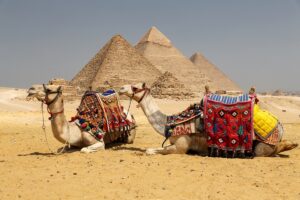

When most people picture a trip to Egypt, they imagine quiet walks through silent temples, dusty archaeological digs, and camel rides under a blazing hot sun. While those classic experiences are absolute must-dos, there is another, far more lively side to this country.

Egypt has a deeply communal soul. Throughout the year, the streets, temples, and coastal beaches burst into life with festivals that have been celebrated for thousands of years—alongside cutting-edge modern events.
If you want to experience the true heartbeat of the country rather than just checking monuments off a list, timing your travel with one of these major events is the way to do it. Here are the top annual events in Egypt worth planning your entire itinerary around.
When is the Abu Simbel Sun Festival, and Why is It a Must-See?
If you want to witness a mind-boggling mix of ancient astronomical genius and pure architectural magic, you need to head to Upper Egypt.
The Abu Simbel Sun Festival happens only twice a year:
- February 22nd (commemorating King Ramesses II’s ascension to the throne)
- October 22nd (marking his birthday)
What actually happens?
Over 3,200 years ago, ancient Egyptian architects built the Great Temple of Ramesses II with such mathematical precision that the rising sun aligns perfectly with the entrance on only these two specific mornings.
At dawn, a single beam of light pierces through the pitch-black entrance, traveling more than 200 feet deep into the temple’s rock-cut mountain sanctuary. It perfectly illuminates three of the four seated statues inside: Ramesses II, Ra-Horakhty (the sun god), and Amun-Ra (the king of gods).
The fourth statue, representing Ptah (the god of the underworld), remains intentionally cast in shadow.
What is the vibe?
Hundreds of travelers and locals gather in the cool, pre-dawn desert air outside the temple. As the first ray of light hits the inner sanctum, a cheer goes up. The surrounding area turns into a vibrant street festival filled with traditional Nubian music, energetic folk dancing, and delicious local food stalls.
What is Sham El-Nessim, and How is Spring Celebrated in Egypt?
If you are traveling to Egypt in early spring, you might get to experience Sham El-Nessim (which translates literally to “sniffing the breeze”).
This is not just any holiday; it is arguably Egypt’s oldest continuous celebration. Its roots go back over 4,500 years to the Pharaonic spring festival of Shemu, which celebrated the arrival of the harvest and the rebirth of life. Today, it is celebrated as a national public holiday on the Monday immediately following Coptic Easter, bringing together Egyptians of all religious backgrounds.
How do locals celebrate?
On Sham El-Nessim, towns and cities empty out as families head outdoors. Parks, botanical gardens, and the grassy banks of the Nile River fill with picnics, laughter, and music.
The day is defined by a very specific menu of symbolic foods:
- Feseekh: A traditional fermented, heavily salted grey mullet fish. It has an incredibly pungent aroma and is an acquired taste, but Egyptians absolutely love it!
- Ringa: Smoked herring, which is a milder alternative to feseekh.
- Colored Eggs: Just like in ancient times, families color boiled eggs, representing renewal and new life.
- Green Onions and Lettuce: Sacred plants from Pharaonic times that symbolize spring and vitality.
If you are in Egypt during this day, buy some fresh fruit, find a spot in a local park, and join the nationwide outdoor party.
How Does Ramadan Transform Egypt’s Nights into a Giant Street Celebration?
Because the Islamic calendar is lunar, the holy month of Ramadan shifts forward by about 10 to 11 days every year. If your trip happens to fall during this sacred month, you are in for an incredibly warm, atmospheric, and unforgettable cultural experience.
During the day, life slows down considerably. Muslims fast from dawn until sunset, meaning many local restaurants and cafes close or operate on limited hours during daylight.
The magic starts at sunset
As the evening prayer begins, a sudden silence falls over the city, followed by the booming sound of a ceremonial cannon. This is the signal for Iftar—the meal to break the fast.
After Iftar, Egypt completely transforms. The streets wake up with an energy that easily rivals New Year’s Eve.
- The Fanous: Streets, balconies, and shops are strung with brilliant, colorful geometric lanterns called fanous.
- Street Feasts: Neighborhoods set up long, community-funded tables in the streets (Ma’edat Al-Rahman) to feed anyone and everyone for free.
- Late-Night Cafe Culture: Families and friends stay out until the early hours of the morning, drinking mint tea, eating sweet qatayef (stuffed pancakes), and smoking shisha in outdoor cafes.
- The Mesharati: In many traditional neighborhoods, you can still hear the “Mesharati”—a drummer who walks the streets in the quiet hours before dawn, singing and calling out to wake people up for Sohour (the pre-dawn meal).
The month culminates in Eid al-Fitr, a massive three-day celebration filled with sweet, powdered-sugar-covered cookies (kahk), new clothes, and festive outdoor gatherings.
What is Coptic Christmas, and How is it Celebrated on January 7th?
While Western Christian traditions celebrate Christmas on December 25th, Egypt’s Coptic Orthodox Christians follow the older Julian calendar. This means Coptic Christmas is celebrated on January 7th, making early January an incredible time to visit, especially if you spend it in Cairo.
What are the traditions?
Before Christmas, devout Coptic Christians participate in a strict 43-day vegan fast, abstaining from all meat, poultry, dairy, and fish.
On Christmas Eve (the night of January 6th), the celebration begins in earnest. The spectacular, modern Cathedral of the Nativity in Egypt’s New Administrative Capital, along with historic churches throughout Old Coptic Cairo, host massive midnight liturgies.
The service is highly sensory, filled with the rich scent of frankincense, beautifully chanted ancient hymns, and flickering candlelight.
Once the clock strikes midnight, the fast is officially broken. Families head home to enjoy a massive feast centered around Fatta—a delicious, comforting traditional dish made of layers of rice, crispy flatbread, boiled lamb or beef, and a warm garlic-vinegar tomato sauce.
Why is the Sandbox Festival in El Gouna Perfect for Music Lovers?
Egypt isn’t just about ancient history. If you are a fan of modern electronic music, beautiful coastal views, and boutique festival cultures, you should look into booking a trip in early May.
The Sandbox Festival is Egypt’s premier beachside music festival, held annually in the beautiful Red Sea resort town of El Gouna (located just north of Hurghada).
What makes it special?
Instead of a massive, sterile stadium, Sandbox takes place right on the sandy shores of the Red Sea Riviera. Over three days, the festival showcases more than 100 international, regional, and local electronic DJs performing across multiple creative stages.
Attendees fly in from dozens of countries to dance barefoot in the sand, swim in the crystal-clear Red Sea during the day, and watch spectacular coastal sunsets while listening to world-class live sets. It is a brilliant, youthful showcase of Egypt’s vibrant contemporary arts and music scene.
Do I Need an Egypt Tourist Visa to Attend These Events?
Yes! Unless you are from one of the few visa-exempt countries, you will need a valid Egypt tourist visa to enter Egypt and join these incredible celebrations.
Fortunately, getting your travel authorization doesn’t have to involve standing in long queues or navigating complicated government websites. Applying online before your flight is the easiest way to secure a stress-free entry.
Why Choose Us?
Planning a trip across the globe can be stressful, but sorting out your entry paperwork shouldn’t be. Here is how we make your travel preparations smooth and simple:
- Reliable Travel Visa Services: Our proven, global approach has successfully assisted numerous travelers in obtaining their official Egypt Visa with ease.
- Round-the-Clock Assistance: Rest easy knowing you can reach out to our dedicated support team 24/7. Our visa experts are always ready to assist and will respond to your queries within 72 hours.
- Experienced Visa Consultants: Don’t risk travel delays. Receive expert guidance and thorough application reviews to ensure the swift acceptance of your application.
- Efficient Visa Application Process: No complicated jargon or endless paperwork. You can apply for your Egypt tourist visa in just a few minutes using our highly simplified online form.
Ready to secure your spot at the next Abu Simbel Sun Festival or dance under the stars at the Red Sea? Get your travel documents sorted out today by visiting the Egypt Tourist Visa Application Portal.