
A brain tumour is a mass or growth of abnormal cells in the brain. While not all brain tumours are cancerous, even benign ones can be dangerous due to the limited space inside the skull. As the tumour grows, it can press against healthy brain tissue and interfere with important functions, such as movement, memory, or speech.
Brain tumours often go unnoticed in the early stages because their symptoms can mimic those of other common conditions. Many people live with signs for months or even years before getting diagnosed. That’s why it’s so important to listen to your body and know when something doesn’t feel right. Detecting a brain tumour early can lead to more effective treatment and better chances of recovery.
This blog will break down 10 early brain tumor symptoms that you should never ignore — and when to seek expert care from a neurosurgeon like Dr. Navneet Kumar at IQ City Hospital, one of the leading hospitals in Durgapur.
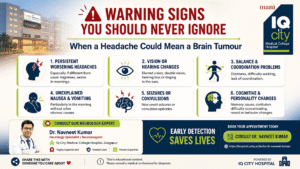
1. Persistent Headaches
Frequent headaches are one of the most common early brain tumor symptoms. These are not your usual tension or stress headaches. They may:
- Feel more intense in the morning
- Get worse with coughing, sneezing, or sudden movement
- Increase in frequency and severity over time
If you’re experiencing unusual headaches that don’t improve with medication or rest, it’s time to consult a specialist.
2. Blurred or Double Vision
Vision problems — such as blurriness, double vision, or sudden loss of vision in one eye — can signal pressure building inside the brain. Some tumours press on the optic nerve or the brain regions responsible for sight. Frequent changes in your eyeglass prescription may also be a red flag.
3. Unexplained Nausea or Vomiting
Nausea and vomiting not linked to food poisoning or a stomach illness can be caused by increased pressure inside the skull. This is especially concerning when it occurs in the morning or is accompanied by a headache — a classic pairing among brain tumor symptoms.
4. Seizures
Having a seizure — especially for the first time in adulthood — is a serious warning sign. A tumour can trigger abnormal electrical activity in the brain. Not all seizures involve shaking; some may cause staring spells, temporary confusion, or unusual sensations.
5. Difficulty with Balance or Coordination
Suddenly stumbling, losing balance, or struggling with hand-eye coordination may point to a tumour in the cerebellum, the part of the brain that controls movement. Don’t dismiss repeated episodes of unsteadiness.
6. Speech Difficulties
Struggling to find the right words, slurring speech, or forgetting how to form sentences are symptoms often linked to tumours in language-controlling areas of the brain. Any sudden change in your ability to communicate clearly warrants immediate medical attention.
7. Changes in Personality or Behaviour
Tumours affecting the frontal lobe can alter mood and personality. You may become more irritable, withdrawn, or behave in ways that are out of character. These changes are often subtle but noticeable to close family and friends.
8. Memory Loss or Cognitive Decline
Short-term memory issues, confusion, or difficulty concentrating can be early indicators of a brain tumour. People may struggle to complete everyday tasks or forget things they normally wouldn’t.
9. Hearing Problems or Ringing in the Ears
Tumours near the auditory nerve can cause hearing loss or a persistent ringing sensation known as tinnitus. This may affect one or both ears and should not be ignored, especially if it appears suddenly.
10. Fatigue and Unexplained Weakness
Persistent tiredness, even after adequate rest, can be linked to a brain tumour. Some people also experience weakness or numbness on one side of the body, indicating pressure on brain regions responsible for movement.
Conclusion
Brain tumor symptoms can vary depending on the size, type, and location of the tumour. Because these signs often overlap with other conditions, they are frequently overlooked or misdiagnosed. However, paying attention to persistent or worsening symptoms is key.
If you or a loved one is experiencing any of the warning signs above, consult Dr. Navneet Kumar — a Consultant Neurosurgeon specialising in brain, spine, and vascular neurosurgery at IQ City Hospital, one of the most trusted hospitals in Durgapur. Early diagnosis can significantly improve treatment outcomes and quality of life.
Your brain is your most vital organ. Don’t wait until it’s too late to take symptoms seriously.
📞 Book an OPD appointment with Dr. Navneet Kumar at IQ City Hospital, Durgapur: https://hospital.iqcity.in/appointment/
Frequently Asked Questions
How is a brain tumour diagnosed?
Brain tumours are usually diagnosed through imaging tests such as MRI or CT scans. In some cases, doctors may also perform a biopsy to confirm the type of tumour.
Are all brain tumours cancerous?
No, not all brain tumours are cancerous. Some are benign and grow slowly, while others can be malignant and spread quickly. Both types can cause symptoms and require medical attention.
Can lifestyle or diet help prevent brain tumours?
While there’s no guaranteed way to prevent brain tumours, maintaining a healthy lifestyle, avoiding exposure to harmful radiation, and not smoking can help reduce risks.
What are the treatment options for brain tumours?
Treatment depends on the type and location of the tumour. Options may include surgery, radiation therapy, chemotherapy, targeted drug therapy, or a combination of these.
Can people live a normal life after brain tumour treatment?
Yes, many people lead fulfilling lives after treatment. Recovery depends on early detection, the type of tumour, and its impact on brain function. Rehabilitation and regular follow-ups with a specialist like Dr. Navneet Kumar at IQ City Hospital are important.