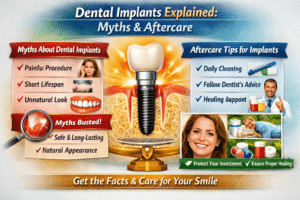

Dental implants have quietly become one of the most life-changing dental procedures available today — yet most people walk into their first consultation with a head full of half-truths picked up from the internet or a neighbour’s horror story. The reality is far more nuanced, and frankly, far more reassuring than the myths suggest. Whether you are missing a single tooth or considering a full-mouth restoration, understanding what implants actually involve — the procedure, the healing, the long-term care — can make the difference between a confident decision and an anxious one. This guide cuts through the noise and gives you the real picture, from the operating chair to ten years down the line.
What Are Dental Implants, Really?
At their core, dental implants are small titanium posts that are surgically placed into the jawbone to act as artificial tooth roots. Once the bone fuses around the post — a process called osseointegration — a crown is placed on top, creating a replacement tooth that looks, feels, and functions like a natural one. Unlike dentures, implants do not slip or require adhesives. Unlike bridges, they do not require grinding down adjacent healthy teeth.
The entire system has three components: the implant fixture (the titanium post), the abutment (a connector piece), and the crown (the visible tooth). Understanding this structure helps patients appreciate why the process takes time — rushing any stage compromises the entire foundation.
Common Myths About Dental Implants — Busted
There is a surprising amount of misinformation circulating about implants, and much of it puts people off unnecessarily. Let us address the most persistent ones.
Myth 1: Implants Are Unbearably Painful
This is probably the most common fear. The truth? Most patients report that the procedure is far less uncomfortable than they anticipated. Local anaesthesia ensures you feel no pain during the surgery itself. Post-operative soreness is real but typically manageable with over-the-counter pain relief and usually subsides within a few days. The discomfort is often compared to a routine tooth extraction — noticeable, but nothing dramatic.
Myth 2: Implants Look Fake or Obvious
Modern implant crowns are custom-fabricated to match the shape, colour, and size of your surrounding teeth. Even people who see you daily will not be able to distinguish the implant from your natural teeth. The craftsmanship has improved enormously over the past decade.
Myth 3: Implants Are Only for Older People
Age is not the deciding factor — bone density and overall health are. Young adults who have lost a tooth due to injury or decay can be excellent candidates. A qualified implantologist will assess your bone structure through X-rays or CT scans and advise accordingly, regardless of your age.
Myth 4: Implants Fail Frequently
Clinical success rates for dental implants consistently hover around 95 to 98 percent over ten years, which makes them one of the most predictable procedures in modern dentistry. Failures do happen, but they are relatively rare and are usually linked to smoking, uncontrolled diabetes, or inadequate oral hygiene — all factors that are largely within the patient’s control.
Who Is a Good Candidate for Dental Implants?
Not everyone who wants an implant is immediately ready for one. A thorough evaluation is essential before proceeding.
Key Eligibility Factors
Good candidates typically have adequate jawbone density to anchor the implant, healthy gums free of active periodontal disease, and overall health conditions that do not significantly impair healing. Non-smokers or those willing to quit tend to have significantly better outcomes. Conditions such as uncontrolled diabetes or autoimmune disorders require careful medical management before any implant surgery is considered.
When Bone Grafting Is Needed
If the jawbone has deteriorated — which often happens when a tooth has been missing for a long time — a bone graft may be required before implant placement. While this adds time to the overall process, it is a well-established preparatory procedure that dramatically improves long-term success. Your dentist will walk you through whether this applies to your case.
The Aftercare Nobody Fully Prepares You For
Here is where many patients feel slightly blindsided — not because aftercare is difficult, but because it genuinely matters more than they expected. The healing phase is the most critical window in your entire implant journey.
In the first 48 hours, avoid hot foods, hard foods, and smoking. Rinsing with warm salt water after meals helps keep the site clean without disturbing the clot. Swelling is normal and typically peaks around day two before gradually resolving.
Over the following weeks, soft foods are your best friend. Think dal, khichdi, scrambled eggs, mashed vegetables. Your implant is integrating with the bone during this period, and unnecessary pressure can interfere with that process.
Visiting the best dental clinic in nagpur for your follow-up appointments is not optional — these check-ins allow your doctor to monitor healing and catch any complications early.
Signs That Warrant Immediate Attention
Most healing is uneventful, but watch for prolonged or worsening pain beyond the first week, swelling that is getting worse rather than better, unusual discharge from the surgical site, or a crown that feels loose or misaligned. These are not causes for panic, but they do warrant a prompt call to your dental team rather than a wait-and-see approach.
Long-Term Maintenance: Making Your Implants Last Decades
Here is the part that truly sets implant patients apart from those who get into trouble years later: maintenance is not optional, and it is not complicated — but it has to be consistent.
Brush twice daily using a soft-bristled toothbrush. Floss around the implant daily using regular floss or an interdental brush — plaque accumulates at the gum line just as it does around natural teeth, and neglecting this area can lead to peri-implantitis, an inflammatory condition that is the leading cause of implant failure in the long term. A water flosser can be a genuinely useful addition to your routine, particularly if you find traditional flossing around the abutment awkward.
See your dentist every six months for a professional cleaning and assessment. At these visits, the implant components will be checked for any signs of wear, and your gums will be evaluated for early signs of inflammation. The investment in these regular appointments is tiny compared to the cost of managing a failing implant.
If you grind your teeth at night — a condition called bruxism — make sure your dentist knows. A custom night guard protects both the crown and the implant from the excessive pressure that grinding generates. Unaddressed bruxism is one of the most underappreciated threats to long-term implant health.
Seeking out the best implantologist in nagpur for your procedure means you will receive not just skilled surgical placement but also guidance tailored to your specific anatomy and lifestyle — making those long-term outcomes significantly better.
Conclusion
Dental implants are one of the most durable and natural-feeling solutions available for tooth loss — but they reward patients who go in informed and committed to their upkeep. The myths around pain and artificiality are largely unfounded. The aftercare is manageable when you know what to expect. And the long-term maintenance, though consistent, is no more demanding than caring for your natural teeth. If you are sitting on the fence about whether implants are right for you, the best next step is a proper consultation with a qualified dental professional who can assess your specific situation, answer your questions honestly, and help you move forward with clarity and confidence.
Frequently Asked Questions
How long does the entire dental implant process take from start to finish?
It varies depending on the individual case, but most patients can expect the process to take between three and nine months. If bone grafting is required, the timeline extends further. Each phase — surgery, osseointegration, crown placement — needs adequate time for the best long-term result.
Can dental implants be done in a single day?
Same-day or immediate implants are possible in certain cases where bone density and gum health meet specific criteria. However, not everyone is a candidate, and the decision depends entirely on a clinical assessment. Ask your dentist whether this option applies to your situation.
Are dental implants covered by insurance in India?
Most standard dental insurance plans in India do not cover implants as they are often classified as cosmetic procedures. However, coverage policies vary, so it is worth checking with your insurer. Many clinics also offer EMI or instalment-based payment options to make the procedure more accessible.
What happens if I do not replace a missing tooth at all?
Leaving a gap untreated can lead to neighbouring teeth shifting into the empty space, bone loss in the jaw at the site of the missing tooth, changes in your bite, and over time, an altered facial appearance. These are progressive issues, which is why timely replacement is generally recommended by dental professionals.
Is it normal to feel the implant through the gum after the procedure?
Some awareness of the implant site is normal in the weeks following surgery, particularly when pressing on the gum. However, sharp pain, visible movement of the implant, or persistent sensitivity beyond the initial healing phase should be reported to your dentist promptly rather than dismissed.