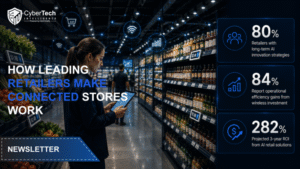

Retail is no longer defined by shelves, checkout counters, and foot traffic alone. Today’s consumers move seamlessly between digital and physical channels, expecting the same level of convenience, personalization, and speed wherever they shop. To meet these expectations, leading retailers are embracing a new operating model: the Connected Store.
A Connected Store is more than a technology upgrade. It is a strategic approach that unifies customer experiences, store operations, inventory visibility, workforce productivity, and real-time decision-making into a single ecosystem. The result is a smarter, more responsive retail environment that benefits both shoppers and employees.
As competition intensifies and customer expectations continue to evolve, retailers that successfully connect their stores are creating measurable advantages in efficiency, profitability, and customer loyalty. They are transforming physical locations from traditional sales outlets into intelligent retail hubs powered by data, automation, and connected technologies.
Why Connected Stores Matter More Than Ever
Modern consumers expect frictionless shopping journeys. They want to browse products online, check local inventory availability, receive personalized recommendations, and enjoy seamless in-store experiences. Retailers that operate disconnected systems often struggle to deliver this level of consistency.
Connected Stores solve this challenge by integrating critical retail functions, including:
-
Inventory management
-
Point-of-sale systems
-
Digital signage
-
Mobile applications
-
Workforce management tools
-
Customer data platforms
-
AI-powered analytics
-
IoT-enabled devices and sensors
When these systems work together, retailers gain real-time visibility across their operations. Associates can make better decisions, customers receive better service, and businesses can respond faster to changing market demands.
The Key Pillars of a Successful Connected Store
1. Real-Time Visibility Across Operations
One of the biggest challenges retailers face is operational blind spots. Inaccurate inventory data, pricing inconsistencies, and delayed reporting can negatively impact customer experiences and profitability.
Leading retailers are addressing these issues by connecting inventory systems, RFID technologies, smart shelves, electronic shelf labels, and store analytics platforms. This creates a single source of truth that helps teams monitor stock levels, product availability, and store performance in real time.
The result is improved inventory accuracy, fewer out-of-stock situations, and more efficient store operations.
2. Empowering Associates with Better Tools
Retail employees remain one of the most important drivers of customer satisfaction. However, many associates spend valuable time performing repetitive tasks instead of engaging with shoppers.
Connected Stores provide frontline teams with mobile tools, AI-driven task management systems, and real-time operational insights. Associates can quickly access product information, locate inventory, manage customer requests, and prioritize high-impact activities.
By reducing manual processes and administrative burdens, retailers empower employees to focus on delivering exceptional customer experiences.
3. Personalized Customer Experiences
Consumers increasingly expect retailers to understand their preferences and shopping habits. Connected Stores make personalization possible by combining customer data from online and offline channels.
Retailers can use these insights to deliver:
-
Personalized promotions
-
Relevant product recommendations
-
Loyalty rewards
-
Context-aware offers
-
Targeted in-store experiences
The ability to connect customer behavior across channels helps retailers build stronger relationships and increase customer lifetime value.
4. Intelligent Automation and AI
Artificial Intelligence is becoming a critical component of Connected Store strategies. Rather than replacing employees, AI helps retailers automate routine tasks and improve decision-making.
Retailers are using AI to:
-
Forecast demand
-
Optimize inventory allocation
-
Improve labor scheduling
-
Detect operational issues
-
Recommend next-best actions
-
Enhance customer engagement
By combining AI with real-time data, retailers can respond proactively to changing conditions and improve operational efficiency at scale.
How Leading Retailers Are Turning Vision into Reality
The most successful retailers understand that building a Connected Store is a journey rather than a one-time transformation.
Instead of replacing every existing system, they focus on connecting technologies already in place and layering intelligence on top of their existing infrastructure. This approach allows them to generate value quickly while minimizing disruption.
Retail leaders typically follow a three-stage maturity model:
Stage 1: Establish Visibility
Retailers begin by connecting core systems and improving data accuracy. The focus is on gaining real-time visibility into inventory, pricing, and store activity.
Stage 2: Enable Intelligent Execution
Once data is connected, retailers introduce automation and orchestration capabilities. AI-driven systems help prioritize tasks, optimize workflows, and coordinate store operations.
Stage 3: Create Continuous Improvement Loops
Advanced retailers transform stores into learning environments where data continuously drives optimization. Every customer interaction, inventory movement, and operational activity becomes an opportunity for improvement.
This phased approach allows organizations to achieve measurable results while building a scalable foundation for future innovation.
The Business Impact of Connected Stores
Retailers investing in Connected Store strategies are seeing benefits across multiple dimensions:
Improved Customer Satisfaction
Customers experience faster service, better product availability, personalized interactions, and smoother shopping journeys.
Increased Operational Efficiency
Connected technologies reduce manual effort, eliminate redundant processes, and improve workforce productivity.
Better Inventory Management
Real-time visibility helps retailers maintain optimal stock levels, reduce waste, and improve replenishment accuracy.
Enhanced Revenue Opportunities
Personalized marketing, improved conversion rates, and more effective merchandising strategies contribute to higher sales performance.
Greater Agility
Retailers can respond more quickly to changing customer behaviors, market conditions, and operational challenges.
The Future of Retail Is Connected
As digital and physical retail environments continue to converge, the Connected Store will become a defining characteristic of successful retail organizations.
Retailers that embrace connected technologies are not simply modernizing their stores—they are creating intelligent ecosystems capable of delivering exceptional experiences while driving sustainable business growth.
The question is no longer whether retailers should invest in Connected Stores. The real question is how quickly they can implement the strategies, technologies, and operational models required to stay competitive in an increasingly connected marketplace.
Organizations that act now will be better positioned to meet customer expectations, empower employees, and unlock new opportunities for innovation in the years ahead.
Read More
Discover how leading retailers are building smarter, more connected store environments, leveraging AI, real-time data, automation, and omnichannel strategies to transform customer experiences and operational performance.
Read the full newsletter: How Leading Retailers Make Connected Stores Work and learn the strategies shaping the future of retail.
Contact Us
1846 E Innovation Park Dr, Suite 100, Oro Valley, AZ 85755
Phone: +1 (845) 347-8894, +91 77760 9266