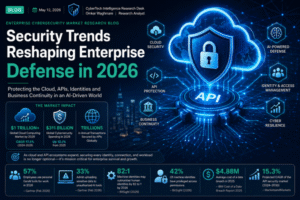

Artificial intelligence is transforming enterprise operations at an unprecedented pace. From intelligent automation to predictive analytics and AI-powered customer engagement, organizations are rapidly integrating AI into their cloud ecosystems. But as AI adoption accelerates, so do the cybersecurity risks tied to cloud APIs.
APIs now serve as the backbone of modern digital infrastructure. They connect cloud platforms, AI models, SaaS applications, mobile services, and internal enterprise systems. However, this growing dependence on APIs has created a much larger and more complex attack surface for cybercriminals.
APIs: The Hidden Foundation of AI Ecosystems
AI applications rely heavily on APIs for data exchange, automation workflows, model communication, and real-time processing. Every chatbot interaction, recommendation engine, or AI-powered business process generates API traffic behind the scenes.
As enterprises scale AI initiatives, API usage grows exponentially. Security researchers report that organizations often deploy AI-enabled services faster than security teams can properly govern them, leading to visibility gaps and unmanaged exposure.
This rapid expansion introduces several major concerns:
- Unsecured or undocumented APIs
- Overprivileged access permissions
- Weak authentication controls
- Exposed API keys and credentials
- Shadow AI deployments outside IT oversight
The combination of cloud complexity and AI acceleration has made APIs one of the most targeted entry points for attackers.
The Rise of AI-Driven API Threats
Cybercriminals are now using AI to automate reconnaissance, identify vulnerabilities faster, and launch sophisticated attacks at scale. According to recent industry findings, attacks targeting APIs have increased sharply as AI adoption grows across enterprises.
One of the most alarming trends is the growth of exposed API credentials. Security reports show that leaked AI-related API keys have surged dramatically, largely due to poorly governed cloud environments and shadow AI usage.
Attackers commonly exploit:
- Broken authentication mechanisms
- Misconfigured API gateways
- Excessive data exposure
- Vulnerable third-party integrations
- Weak identity and access management policies
Because APIs often handle sensitive enterprise and customer data, even a single exposed endpoint can lead to major operational and financial consequences.
Why Traditional Security Models No Longer Work
Legacy cybersecurity frameworks were designed for perimeter-based environments. Modern cloud-native infrastructures are fundamentally different.
Today’s enterprises operate across distributed clouds, microservices, AI pipelines, and hybrid architectures where APIs continuously communicate across systems. Traditional firewalls and static defenses struggle to provide visibility into these dynamic environments.
In many organizations, security teams lack a complete inventory of active APIs. Without full visibility, enterprises cannot effectively monitor, classify, or secure their digital assets.
This challenge becomes even more serious with AI workloads, which often introduce:
- High-volume API interactions
- Autonomous decision-making systems
- Non-human identities and service accounts
- Dynamic data flows across multiple cloud providers
As a result, security teams must shift from perimeter protection to continuous API discovery, monitoring, and runtime protection.
The Growing Risk of Shadow AI
Shadow AI is emerging as another major concern for enterprise leaders. Employees increasingly adopt unauthorized AI tools and external platforms to improve productivity, often without IT approval or security validation.
These unofficial tools frequently connect to enterprise environments using APIs and sensitive credentials, creating unmanaged access points that security teams cannot track effectively.
The risks associated with shadow AI include:
- Data leakage
- Intellectual property exposure
- Compliance violations
- Unauthorized third-party access
- Credential theft
Without governance policies and centralized oversight, organizations face increased exposure to insider threats and external cyberattacks.
AI Security Requires a Runtime Protection Strategy
Modern enterprises can no longer rely solely on protecting data at rest or in transit. AI systems process sensitive information dynamically during runtime, making “data in use” protection increasingly important.
Security experts now recommend adopting:
- Zero Trust architectures
- Runtime API monitoring
- Behavioral analytics
- AI-aware threat detection
- Continuous identity verification
- Least-privilege access controls
Organizations must also secure machine identities, API tokens, and service accounts with the same rigor traditionally applied to human users.
Building a Resilient API Security Framework
To reduce cloud API risks while enabling AI innovation, enterprises should prioritize several strategic initiatives:
1. Maintain a Complete API Inventory
Security teams need full visibility into all internal, external, and third-party APIs operating across the environment.
2. Strengthen Authentication and Authorization
Implement multi-factor authentication, token validation, and role-based access policies to minimize unauthorized access.
3. Monitor APIs Continuously
Real-time monitoring helps identify abnormal behavior, credential misuse, and suspicious traffic patterns before breaches escalate.
4. Secure AI Workloads Separately
AI systems introduce unique attack vectors and should be governed with dedicated security controls and compliance standards.
5. Address Shadow AI Risks
Establish clear AI governance policies and educate employees on secure AI usage practices.
6. Automate Threat Detection
AI-driven security analytics can help organizations identify anomalies and respond to threats faster than traditional manual approaches.
The Future of Enterprise Security Is API-Centric
As enterprises continue their digital transformation journeys, APIs will remain central to cloud and AI innovation. But with greater connectivity comes greater responsibility.
Organizations that fail to modernize API security strategies risk exposing critical systems, customer data, and AI infrastructure to increasingly sophisticated attacks.
In the AI era, cybersecurity is no longer just about protecting networks — it is about securing the intelligent, interconnected ecosystem that powers modern business operations.
A proactive API security strategy is now essential for sustainable enterprise growth, operational resilience, and long-term digital trust.