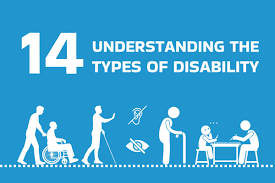

Understanding the Types of Disabilities and Why Awareness Changes Everything
Disability is often spoken about in narrow terms, as if it fits into a single box or looks the same for everyone. In reality, disability is deeply human, diverse, and shaped by personal experiences, environments, and social attitudes. When we truly understand the different types of disabilities, we move beyond sympathy and toward inclusion, dignity, and meaningful support.
This article is not just about naming categories. It is about changing how we see ability, value, and participation in society. By the end, you should not only understand the types of disabilities, but also think differently about access, empathy, and everyday interactions.
What Does Disability Really Mean
A disability is any condition that affects how a person moves, communicates, learns, behaves, or interacts with the world. Some disabilities are visible, while others are hidden. Some are present from birth, while others develop later due to illness, injury, or aging.
What many people miss is this simple truth. Disability is not only about the body or mind. It is also about barriers. When environments, systems, and attitudes are designed for only one type of person, disability is created.
This perspective shifts responsibility from the individual to society. Instead of asking what is wrong with a person, we start asking what needs to change around them.
Physical Disabilities
Physical disabilities affect a person’s movement, strength, coordination, or physical functioning. These disabilities can limit mobility or make certain physical tasks more challenging.
Common examples include spinal cord injuries, cerebral palsy, muscular dystrophy, arthritis, and limb loss. Some people use wheelchairs or mobility aids, while others may walk but experience pain, fatigue, or limited range of motion.
A common assumption is that physical disability equals inability. In reality, many people with physical disabilities live highly independent and successful lives. The real challenges often come from inaccessible buildings, transportation, and workplaces rather than the condition itself.
When cities include ramps, elevators, wide pathways, and accessible restrooms, independence increases immediately. Inclusion is often a design decision.
Sensory Disabilities
Sensory disabilities affect one or more of the senses, most commonly vision and hearing. These disabilities change how people receive and process information from the world.
Visual Disabilities
Visual disabilities range from partial vision loss to complete blindness. Some people may see shapes or light but not detail, while others may lose vision gradually over time.
Assistive tools like screen readers, braille, audio descriptions, and accessible website design allow people with visual disabilities to study, work, and communicate effectively. When digital content is not accessible, exclusion happens quietly but powerfully.
Hearing Disabilities
Hearing disabilities include partial hearing loss and complete deafness. Some individuals use hearing aids or cochlear implants, while others rely on sign language or lip reading.
Clear communication matters here. Captions, transcripts, visual alerts, and inclusive meeting practices make a significant difference. Many people who are deaf do not see themselves as disabled but as part of a rich linguistic and cultural community.
Intellectual Disabilities
Intellectual disabilities affect cognitive functioning, including learning, reasoning, problem solving, and adaptive behavior. These disabilities usually appear before adulthood and influence how a person understands and processes information.
Examples include Down syndrome and other developmental conditions. People with intellectual disabilities may learn at a different pace or need information presented in simpler, more structured ways.
The biggest barrier is often low expectations. When society assumes limitation instead of potential, opportunities disappear. With proper education, support, and patience, many individuals with intellectual disabilities build strong social lives, hold jobs, and contribute meaningfully to their communities.
Understanding does not mean lowering standards. It means changing how we teach, communicate, and support growth.
Learning Disabilities
Learning disabilities affect how people read, write, calculate, or process information. Intelligence is not the issue here. Many people with learning disabilities are highly intelligent and creative.
Conditions such as dyslexia, dyscalculia, and dysgraphia fall into this category. A person may struggle with spelling or math but excel in problem solving, leadership, or visual thinking.
Unfortunately, traditional education systems often reward only one type of learner. When schools embrace diverse learning styles and flexible teaching methods, students with learning disabilities often thrive.
A different way of learning is not a weakness. It is often a strength in disguise.
Neurodevelopmental Disabilities
Neurodevelopmental disabilities affect brain development and influence behavior, communication, and social interaction. These conditions usually appear in early childhood.
Autism spectrum condition is one of the most well known examples. Autistic individuals may experience differences in sensory processing, communication styles, or social interaction. Some may need significant daily support, while others live independently and excel in specialized fields.
Attention related conditions also fall into this category. These can affect focus, impulse control, and organization.
The key insight here is neurodiversity. Human brains are wired differently, and this diversity fuels innovation, creativity, and progress. The problem is not difference. The problem is environments that demand conformity instead of flexibility.
Mental Health Disabilities
Mental health disabilities affect emotional well being, thinking patterns, and behavior. These conditions can be temporary, recurring, or long term.
Examples include depression, anxiety disorders, bipolar condition, and post traumatic stress. Unlike many physical disabilities, mental health conditions are often invisible, which can lead to misunderstanding or judgment.
One of the most harmful myths is that people can simply choose to feel better. Mental health disabilities are real medical conditions that deserve care, respect, and support.
When workplaces allow flexibility, access to counseling, and open conversations, productivity and loyalty often increase. Supporting mental health is not just compassionate. It is practical.
Chronic Illness and Invisible Disabilities
Some disabilities are invisible but deeply impactful. Chronic illnesses such as autoimmune conditions, neurological disorders, and long lasting pain conditions may not be immediately noticeable but can significantly affect daily life.
Fatigue, pain, brain fog, and fluctuating symptoms are common experiences. A person may appear fine one day and struggle the next.
Because these disabilities are unseen, people are often pressured to explain or justify their needs. Trusting people when they say they need support is one of the simplest and most powerful acts of inclusion.
Not all disabilities can be seen. All deserve respect.
Multiple Disabilities
Some individuals live with more than one type of disability. For example, a person may have both a physical disability and a sensory disability, or an intellectual disability combined with a chronic illness.
Support in these cases must be personalized. There is no one size fits all solution. Listening to the individual and involving them in decisions about their care and environment is essential.
Complex needs require thoughtful systems, not assumptions.
Why Understanding Disability Changes Society
When we understand the types of disabilities, something important happens. We stop designing for an imaginary average person and start designing for real humans.
Accessibility improves everyone’s life. Captions help people in noisy rooms. Ramps help parents with strollers. Flexible work benefits caregivers and creatives alike.
Inclusion is not charity. It is smart, ethical, and sustainable.
More importantly, understanding disability builds empathy. It reminds us that vulnerability is part of being human and that ability can change at any point in life.
Moving From Awareness to Action
Awareness alone is not enough. Real change happens when understanding turns into action.
This can be as simple as using