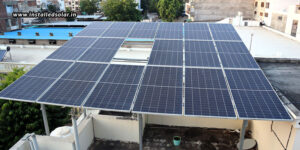

Installing solar panels on a rooftop requires more than simply checking whether the roof looks large enough. The available area must accommodate the panels, mounting structures, access space, and other rooftop equipment while allowing the panels to receive sufficient sunlight. The amount of space required depends largely on the desired solar capacity, the type and size of panels selected, their arrangement, and the characteristics of the roof. Understanding these factors helps property owners determine whether their rooftop can accommodate the required solar system and how the available space can be used effectively.
How much space does a solar panel system need?
The space required for a rooftop solar system depends primarily on its capacity. A larger system requires more panels and therefore more usable roof area. However, the total installation area cannot simply be calculated by multiplying the number of panels by their individual size. Additional space may be required for panel spacing, mounting arrangements, access, and rooftop conditions. As a broad planning estimate, a rooftop solar system may require approximately 70–100 square feet of usable area per kW, depending on the panels and layout. The actual requirement should always be confirmed through a site assessment and system design.
Why system capacity determines space requirements
Solar system capacity indicates the amount of electricity the installation is designed to generate. As the required capacity increases, more panels are generally needed, which increases the overall space requirement. However, capacity should be determined by the property’s electricity consumption rather than the rooftop size alone. The available roof area can help establish how much capacity can be installed, while energy requirements indicate how much generation may be needed. Considering both factors allows the system size to be selected according to the property’s actual requirements rather than treating the available rooftop area as the only determining factor.
Why usable roof area matters more than total roof area
A rooftop may appear large, but not all of its surface can necessarily be used for solar panel installation. Only the area that receives adequate sunlight can be considered. Water tanks, staircases, ventilation equipment, satellite dishes, pipes, parapet walls, and other structures can occupy valuable space, while surrounding structures can cause shading on the roof and eliminate portions of the available area. This means the relevant measurement is usable roof area, not simply the total dimensions of the roof. A site survey helps identify which portions of the roof can accommodate panels while maintaining appropriate spacing and access. This assessment provides a more accurate picture of how much solar capacity the property can realistically support.
Space is also needed for access and maintenance
Solar panels should not be installed so closely together that there is no practical way to inspect or maintain the system. Adequate access may be required around sections of the solar array and other rooftop equipment. Maintenance personnel may need to reach panels, electrical components, mounting structures, or other equipment during inspections. The layout should also allow cleaning where necessary. Dust and dirt can accumulate on panel surfaces, particularly in areas with significant airborne particles. Leaving appropriate access space may slightly reduce the number of panels that can be installed on a rooftop, but it supports safer and more practical long-term maintenance.
Factors that affect rooftop space requirements
The actual space required for solar panel installation depends on several rooftop conditions, not just the system capacity.
- Panel efficiency and size: These influence how much electricity can be generated from a given area, with higher-efficiency panels potentially requiring less space for the same capacity.
- Roof orientation and panel placement: Panels need suitable positioning to receive adequate sunlight.
- Shading: Trees, nearby buildings, water tanks, or parapet walls can reduce usable space and affect where panels should be installed.
- Existing rooftop structures: Staircases, pipes, vents, and electrical equipment may further restrict the available area.
- Roof condition and structural suitability: The roof should be assessed to ensure it can safely support the mounting structure and panels.
A proper site survey helps account for these factors when planning the layout.
Can solar panels be installed on a small rooftop?
A solar system does not necessarily require a large rooftop; a small rooftop can also accommodate solar panels if sufficient suitable and unobstructed space is available. If space is limited, higher-efficiency panels may help increase generation within the available footprint. However, the property’s electricity requirements should also be considered. If the available roof can only accommodate a smaller system than the property’s ideal capacity, the installation may generate only part of its electricity needs. The right approach is therefore to determine the available usable area first, assess its solar potential, and then identify a suitable system capacity.
How to make better use of limited rooftop space
Several aspects of system design can help make better use of limited rooftop space, especially on smaller rooftops.
- Use higher-efficiency panels: These can increase the amount of generation achieved from a limited footprint.
- Plan the panel arrangement carefully: This can reduce wasted space caused by awkward roof shapes or existing structures.
- Adjust system capacity: The system can be sized according to the property’s energy requirements and usable roof area.
- Focus on required generation: Instead of attempting to maximize the number of panels, the design can focus on achieving the required generation from the most suitable portions of the roof.
A professional site assessment is therefore particularly valuable when rooftop space is restricted. For property owners planning rooftop solar in Banashankari, iNSTALLED can help assess the available rooftop space and plan a suitable solar installation based on the property’s requirements. Their approach focuses on making practical use of the available area while considering the system’s intended capacity and installation requirements.
What if there is more roof space than required?
Having more available rooftop space does not necessarily mean that the entire area needs to be used for solar installation. If the required system capacity can be accommodated within a smaller portion of the roof, the remaining area can be left available for other property requirements or future use. The decision should depend on the electricity generation needed and the system capacity considered appropriate for the property. This allows the rooftop to be used according to actual requirements rather than installing additional panels simply because space is available.
Rooftop solar can be a practical way to generate electricity while making productive use of otherwise underutilized roof space. However, the success of a solar installation depends on choosing a system that suits the property, its energy needs, and the available conditions. Rather than focusing only on installation size, property owners should consider the overall suitability of the project and its long-term practicality. With thoughtful planning and professional design, rooftop solar can provide a dependable source of renewable energy and support greater control over electricity generation. Taking the time to assess the property properly can help ensure that the investment delivers meaningful and lasting benefits.