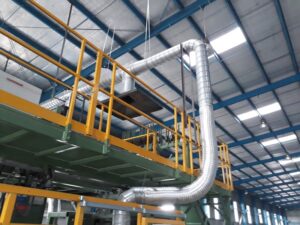

A factory can have a powerful exhaust fan and still struggle with fumes. Workers may notice lingering odours, vapours may escape around a workstation, and paint-related emissions may spread beyond the finishing area. In many cases, the problem is not simply the absence of equipment. It is a mismatch between the emission source, the capture arrangement, the airflow, and the treatment technology.
An effective industrial air pollution control strategy needs to address these elements together. A Fume Exhaust System captures and transports contaminated air, a Dust collector removes suitable particulate matter, and an Activated carbon filter can adsorb selected gaseous pollutants. A Paint booth helps manage spray-finishing emissions, while a Bio Scrubber may be suitable for certain gas streams and odour-control applications.
GPT-INDIA, also known as Green Planet Technologies, works in industrial air pollution control, dust collection, ventilation, and exhaust technology. Understanding how these systems differ helps industrial buyers identify the right equipment for their process rather than relying on a one-size-fits-all solution.
Fume Exhaust System: Why Capturing Emissions at the Source Matters
A Fume Exhaust System is designed to collect contaminated air from a process and convey it through ductwork to a suitable discharge point or treatment device. Depending on the application, the contaminants may include fumes, vapours, gases, mist, or airborne particles.
Such systems can be important in chemical processing, metalworking, surface treatment, painting, manufacturing, and other operations that release airborne contaminants. The exact configuration depends on the process, the substances involved, and the required treatment outcome.
One of the most important components is the capture hood or enclosure. If it is positioned too far from the emission source, contaminants may escape before the airflow can collect them. If the hood interferes with the process or creates an unsuitable airflow pattern, capture performance may also suffer.
The ductwork and exhaust fan must then move the contaminated air through the system at the required operating conditions. Duct dimensions, bends, leakage, pressure losses, and the resistance of downstream equipment all influence performance.
The US Environmental Protection Agency explains that local exhaust ventilation commonly uses a hood, duct system, and exhaust fan to capture and transport emissions to a control device. It also highlights the importance of maintaining the capture arrangement and airflow. EPA guidance on capture systems.
For industrial buyers, this means that selecting a fan based only on its motor rating is not enough. The complete system must be evaluated to ensure that contaminants are captured where they are generated and conveyed to the intended destination.
What Makes a Fume Exhaust System Suitable for a Factory?
Different processes release different contaminants, so the system needs to be designed around actual operating conditions.
A metalworking operation may generate fumes or fine particulate matter, while a coating line can release paint droplets and solvent vapours. Chemical handling may involve corrosive gases or vapours that require compatible materials and a dedicated treatment arrangement.
The first consideration is the contaminant itself. Its chemical properties, concentration, temperature, moisture content, and potential hazards influence the choice of duct materials, fan construction, and treatment equipment. These details should be established before finalizing the system.
Airflow requirements are equally important. A hood needs enough airflow to capture emissions without unnecessarily increasing the volume of air that must be transported and treated. Excessive airflow can increase energy consumption and the size of downstream equipment, while inadequate airflow can allow pollutants to escape.
The factory layout also matters. Equipment placement, operator movement, available installation space, make-up air, and duct routing can all influence the final design. Where several emission points exist, the design should consider which processes operate simultaneously and whether their exhaust streams can safely share a system.
Finally, the exhaust treatment method must match the contaminants. Capturing a pollutant and removing it from the exhaust stream are two different tasks. A properly designed Fume Exhaust System addresses the first; a suitable control device may be required to address the second.
Paint Booth: Managing Overspray and Coating Emissions
Spray painting introduces a mixture of potential air quality concerns. Some coating material misses the workpiece and becomes airborne overspray. Depending on the paint formulation and application method, the process may also release solvent vapours and other gaseous compounds.
A Paint booth provides a defined finishing area and guides airflow through an appropriate overspray collection arrangement. Booth designs vary according to the workpiece, coating method, production volume, and collection requirements. Some use dry filter media, while water-curtain designs use water to help capture airborne paint material.
The booth must be designed around the actual finishing operation. Workpiece size, spray direction, operator access, airflow patterns, and the method of collecting paint residue all influence its suitability. Filters or water-based collection components also require regular inspection and servicing.
It is important to distinguish overspray collection from gas treatment. A booth that captures paint droplets does not necessarily remove every solvent vapour or gaseous contaminant in its exhaust. Depending on the coating and emission profile, additional treatment may be necessary.
For this reason, businesses comparing Paint booth manufacturers should ask how the proposed equipment manages airflow, overspray, exhaust discharge, and maintenance. They should also clarify whether the project requires a separate treatment stage for gaseous emissions.
A complete assessment should consider the coating materials and relevant fire, worker-exposure, and environmental requirements. The right arrangement depends on the application rather than the booth name alone.
Dust Collector: Controlling Particles Without Confusing Them With Gases
A Dust collector is designed primarily to remove particulate matter from an air stream. It may be used for dust generated during cutting, grinding, sanding, mixing, material handling, or other manufacturing processes.
Different collection technologies suit different dust characteristics. Cyclones use centrifugal action to separate suitable particles, while bag filters pass contaminated air through fabric media that retain particulate matter. The appropriate choice depends on particle size, dust loading, material properties, airflow, and the required outlet-air quality.
A Dust collector is not automatically suitable for removing solvent vapours or every type of chemical fume. Particles and gases behave differently, so they may require different treatment methods.
Consider a manufacturing plant that sands metal components and then spray-paints them. The sanding process may require local dust extraction and particulate filtration. The painting process needs an appropriate booth and ventilation arrangement, with separate gas treatment considered if the coating exhaust contains pollutants requiring it.
Keeping these functions distinct helps prevent incorrect equipment selection. It also makes maintenance easier because collected dust, paint residue, and spent gas-treatment media may need different handling procedures.
Before selecting a collector, buyers should confirm the dust source, expected loading, operating schedule, required airflow, filtration requirements, and method of discharging collected material. If the process also produces fumes or vapours, those emissions should be assessed separately.
Activated Carbon Filter for Selected Vapours and Odours
An Activated carbon filter can be used to adsorb certain gaseous pollutants, vapours, and odorous compounds. Activated carbon has a highly porous structure, providing a large internal surface area on which compatible contaminant molecules can be retained.
This process is called adsorption. Unlike a conventional dust filter, which separates particles from the airflow, activated carbon is used for selected gas-phase contaminants.
Depending on the application, activated carbon may be considered for certain volatile organic compounds, solvent vapours, and odour-producing substances. Its suitability depends on the specific chemicals involved. Not all gases are adsorbed equally well, and standard activated carbon should not be assumed to treat every industrial emission.
Several factors influence performance, including contaminant concentration, airflow, temperature, humidity, carbon type, and contact time. The amount of carbon must be suitable for the treatment duty, and the system needs a plan for identifying when the media is approaching exhaustion.
A pre-treatment stage may be appropriate when the incoming air contains dust, droplets, or other material that could interfere with the carbon bed. However, the required sequence depends on the actual exhaust composition and system design.
When considering an Activated carbon filter for a paint-finishing or chemical process, businesses should first identify the compounds in the exhaust and determine whether carbon is an appropriate medium. The EPA’s activated carbon adsorber guidance provides further information about adsorption and the operating considerations associated with this technology.
Bio Scrubber: When Biological Gas Treatment May Be Appropriate
A Bio Scrubber may be considered for selected industrial gas-treatment and odour-control applications. Biological treatment systems use microorganisms under controlled conditions to help break down suitable contaminants. Their performance depends on the target compounds and the operating environment.
These systems may be relevant to certain wastewater, waste-handling, and process applications where biodegradable gaseous pollutants or odorous compounds need to be treated. The technology is not a universal solution for all industrial fumes, and its suitability must be confirmed for the specific gas stream.
Important design considerations include gas flow, contaminant concentration, temperature, moisture, the composition of the gas, and the conditions needed to maintain the treatment process. Operating procedures may also need to address monitoring, cleaning, water management, and maintenance of the biological treatment environment.
When comparing Bio Scrubber options, buyers should ask which contaminants the proposed system is designed to treat and what performance evidence is available for the intended application. They should also understand operating requirements, potential limitations, and how changes in production conditions may affect performance.
A Bio Scrubber should not be selected merely because an exhaust stream has an unpleasant smell. Odour can arise from different chemical compounds, and some pollutants may require a different technology. A suitable assessment of the gas composition is an important starting point.
How These Technologies Can Work Together
A factory may need more than one technology because its processes can release different types of contaminants.
For example, a coating facility may use a Paint booth to contain the spray-finishing area and collect overspray. Its exhaust can then be assessed to determine whether additional treatment is necessary for gaseous pollutants. An Activated carbon filter may be suitable for certain compatible vapours, provided the carbon type and operating conditions are appropriate.
Elsewhere in the plant, a Dust collector may handle particulate emissions from cutting, grinding, or powder handling. A separate Fume Exhaust System can capture emissions from a chemical or thermal process and convey them to a suitable treatment device. A Bio Scrubber may be considered for a different gas stream if biological treatment is appropriate for the contaminants involved.
The equipment sequence should be determined by engineering assessment rather than a standard arrangement applied to every factory. Dust, paint droplets, vapours, and gases may require separate collection points and treatment stages.
System integration also requires attention to duct routing, airflow balance, pressure losses, access for maintenance, and compatibility of the exhaust streams. Some emissions should not be mixed without a specific technical and safety review.
A useful first step is to map each process, identify its pollutants, and document the required airflow and treatment outcome. This information allows the design team to distinguish between what needs to be captured, what needs to be removed, and where each stage belongs.
Common Reasons Industrial Fume Control Underperforms
An exhaust system can appear to be operating while failing to control emissions effectively. One common cause is poor source capture. If the hood is too far away or the enclosure does not contain the process properly, contaminants may enter the workplace before reaching the exhaust duct.
A second issue is unsuitable airflow. Restrictions, leakage, filter loading, poorly designed ductwork, or an incorrectly selected fan can reduce the airflow available at the collection point. Checking only whether the fan is running will not reveal every performance problem.
A third cause is a mismatch between the pollutant and the treatment device. A dust collector may remove particles but leave gases untreated. An activated carbon bed may be unsuitable for a particular compound, or its media may have reached the end of its useful capacity. A biological system may also perform poorly if the gas composition or operating conditions are outside its suitable range.
Maintenance can contribute to these problems. Filters, ducts, hoods, water systems, and treatment media need inspection according to the equipment design. Changes in process materials or production rates should also trigger a review of whether the original system remains appropriate.
A systematic investigation should examine the source, capture arrangement, airflow, treatment stage, and maintenance history. Replacing equipment without identifying the underlying cause may not resolve the problem.
Selecting Equipment for Long-Term Industrial Performance
When comparing industrial air pollution control proposals, buyers should look beyond the initial equipment price. Energy consumption, consumables, maintenance access, replacement components, operating labour, and downtime can influence the total cost over the system’s service life.
For a Fume Exhaust System, review the capture hood, duct layout, fan selection, and any downstream treatment requirements. For a Paint booth, consider the finishing process, overspray collection, airflow, and residue handling. For a Dust collector, check the filtration method and dust-discharge arrangement.
If an Activated carbon filter is proposed, confirm that the media is compatible with the target pollutants and that there is a realistic replacement or regeneration plan. If a Bio Scrubber is being considered, establish the suitable contaminant range and operating requirements.
Buyers should also provide accurate process information to suppliers. Details about materials, emission sources, production schedules, airflow, temperature, humidity, and known operating problems make it easier to evaluate the proposed solution.
For hazardous fumes, flammable vapours, corrosive gases, or combustible dust, the design must also account for applicable safety requirements. The final system should be assessed for the actual facility and operating conditions rather than relying on general product descriptions.
GPT-INDIA Industrial Air Pollution Control Solutions
GPT-INDIA, also known as Green Planet Technologies, works in industrial air pollution control, dust collection, ventilation, and exhaust technology. Its product range includes Fume Exhaust Systems, Dust Collectors, Activated Carbon Filters, scrubbers, bag filters, paint booths, and other industrial airflow solutions.
The appropriate equipment depends on the process and the contaminants that need to be controlled. A finishing line may require a different arrangement from a metalworking area or a process that generates odorous gases. Some projects may need multiple treatment stages, while others may require a more focused solution for a single emission source.
For a new installation or an upgrade, buyers should share details about the process, contaminants, airflow, operating conditions, available space, and maintenance requirements. This information helps establish which technologies are relevant and what further assessment may be needed.
Contact GPT-INDIA
Green Planet Technologies (GPT-INDIA)
Office Address: 59/2/1, Site 4, Industrial Area, Sahibabad, Distt. Ghaziabad–201010, Uttar Pradesh, India
Phone: +91-9773500660
Email: info@gpt-india.com
For enquiries, provide information about your emission source, the type of fumes or pollutants involved, the required airflow, and any existing ventilation or treatment equipment. For painting applications, include details about the coating process. For gas-treatment projects, share available information about the composition and concentration of the exhaust stream.
Frequently Asked Questions
What is a Fume Exhaust System used for?
A Fume Exhaust System captures and transports contaminated air from a process. Depending on the application, the exhaust may need additional treatment before discharge.
How do Paint booth manufacturers help control coating emissions?
Paint booth manufacturers design finishing enclosures and airflow arrangements to help contain the spray process and collect overspray. Depending on the coating materials, separate treatment may be required for gaseous emissions.
Can a Dust collector remove chemical fumes?
A conventional Dust collector is primarily designed for particulate matter. Chemical fumes and vapours may require a different treatment technology selected for the specific contaminants.
When should an Activated carbon filter be considered?
It may be suitable when the exhaust contains gaseous pollutants or odorous compounds that can be adsorbed by the selected carbon media. The pollutant chemistry and operating conditions should be evaluated before selection.
What is the purpose of a Bio Scrubber?
A Bio Scrubber uses a biological treatment process for selected gaseous contaminants or odour-control applications. Its suitability depends on the gas composition and the conditions required for effective biological treatment.
Can a Paint booth and an Activated carbon filter be used together?
They may be used as parts of a coordinated system when the application requires both overspray collection and treatment of suitable gaseous pollutants. The need for the additional stage should be established by assessing the coating exhaust.
Why might an industrial exhaust system fail to capture fumes properly?
Possible causes include poorly positioned hoods, insufficient airflow, duct leakage, excessive system resistance, unsuitable equipment, or maintenance problems. The complete capture and treatment arrangement should be evaluated to identify the cause.
Conclusion
Industrial fume control requires more than moving contaminated air out of a building. The emissions must be captured effectively, conveyed safely, and treated with technology suited to the pollutants involved.
A Fume Exhaust System provides the capture and transport arrangement, a Paint booth manages finishing overspray, and a Dust collector addresses suitable particulate matter. An Activated carbon filter can treat selected gaseous pollutants, while a Bio Scrubber may be appropriate for certain biological gas-treatment applications.
The most suitable solution depends on the emission source, contaminant characteristics, airflow, operating conditions, and maintenance requirements. By evaluating these factors before choosing equipment, industrial facilities can make more informed decisions about their air pollution control systems.
GPT-INDIA supports industrial air management requirements through its range of dust collection, ventilation, exhaust, and treatment equipment. A clear understanding of the process is the foundation for selecting an appropriate and maintainable solution.