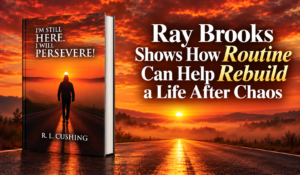

For much of Ray Brooks’s I’m Still Here! I Will Persevere! Addiction to Redemption: life moves through impulse. Parties run late. Drug use stretches for hours. Calls go unanswered. Plans change. Money disappears. Promises are made after the damage. In the later chapters, the rhythm changes. Brooks begins living through schedules, appointments, therapy, caregiving, work, and family contact. That shift may sound less dramatic than the earlier stories, but it becomes one of the clearest signs of recovery. Routine gives Brooks something addiction repeatedly took away: a reliable shape to the day.
Chaos Once Felt Like Freedom
Brooks’s younger years are full of movement. He works, parties, travels, dates, drinks, uses drugs, and frequently decides what comes next in the moment. He often remembers those years with humor because many experiences were genuinely fun.
The problem is that spontaneity gradually becomes unpredictability. Crack use turns a short plan into an all-night absence. One purchase leads to another. Work and relationships have to bend around whatever the addiction demands.
For Brooks, doing what he wanted once felt like independence. Over time, that version of freedom became a trap.
Disability Creates a Different Kind of Schedule
After a rollover accident leaves Brooks with an incomplete spinal cord injury, daily life requires more planning. Rehabilitation teaches him how to transfer, dress, move, and manage basic care. Physical therapy and occupational therapy become responsibilities.
He also needs medical equipment, case management, transportation, and eventually around-the-clock caregiver support. The new routines are not optional. His health depends on them.
At first, structure does not automatically end his addiction. Brooks still drinks and uses crack during parts of his post-accident life. He sometimes tries to hide what he is doing from caregivers. The conflict shows that a schedule alone cannot create recovery if the person keeps building secret spaces around it.
Accountability Makes Routine Stronger
A major change arrives when Brooks begins working with a new healthcare team in 2013. Heather, the nurse overseeing his care, establishes clear expectations. When she discovers continued drug use, she confronts it directly and connects the behavior to consequences Brooks cannot ignore.
This creates a stronger form of routine. It is not simply a calendar. Other people are involved. They know where Brooks should be, what care he needs, and whether something is wrong.
For someone whose addiction depended on secrecy, that visibility matters.
A Full Schedule Gives Him Somewhere to Go
As sobriety becomes more stable, Brooks’s days fill with activities that are not centered on avoiding drugs. He attends therapy. He keeps medical appointments. He spends time with aides and nurses. He goes fishing and attends family events. Later, he becomes involved with work at the Wood Road office.
Brooks writes positively about getting out of his residence and having responsibilities during the week. The routine provides purpose as well as structure.
This distinction is important. Recovery can feel empty if the only goal is not doing something. Brooks’s later life includes things he wants to do and people he wants to see. His calendar becomes connected to participation.
Relationships Grow Through Repetition Too
Routine also helps Brooks rebuild trust. His sons no longer have to experience him mainly through crises. Caregivers become familiar faces rather than temporary professionals. Coworkers and therapists become friends. Holidays and birthdays become recurring events instead of interruptions between periods of chaos.
Brooks frequently calls nurses and aides part of his extended family. Those relationships are built through ordinary repetition: morning care, appointments, conversations, jokes, meals, therapy sessions, rides, and shared celebrations.
The dramatic moments matter, but the quiet ones create stability.
Recovery Looks Ordinary From the Outside
By 2017, Brooks reports more than four years of sobriety. By 2019, he is approaching six years. In 2025, his life still includes medical challenges, but his daily world is organized around care, therapy, work, relationships, and interests such as sports.
That may not sound as cinematic as the addiction years, and that is the point.
The later life Brooks values is built from things that happen again and again. He wakes up. Someone helps with care. He goes to an appointment or work. He talks with people. He returns home. He follows sports. He prepares for the next day.
Ray Brooks’s story shows that routine is not the opposite of freedom. For him, the right routine becomes one of the things that protects it. Structure helps keep his health supported, his relationships active, and his days connected to a purpose beyond addiction.
Stability is built through repeated choices.
In Addiction to Redemption, perseverance is not always a dramatic act. Sometimes it is simply doing what needs to be done today, then getting up and doing it again tomorrow.