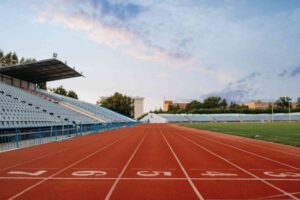

A multi-purpose court has a hard job. On Monday it hosts a school basketball practice, on Wednesday it becomes a badminton hall, and on the weekend it may hold a community fitness class or a prize-giving event. The floor under all of that activity decides how safe, comfortable and long-lasting the space will be. Before you speak to a sports flooring supplier UAE , or compare quotes from jogging track flooring suppliers UAE and running track flooring suppliers uae for the outdoor parts of your campus, it helps to understand what really matters in a multi-purpose floor.
This guide walks through the main flooring types, the performance factors that matter most, and the practical questions that schools, clubs, developers and facility managers in the UAE should ask before signing off on a project.
Why Multi-Purpose Flooring Is Different
A single-sport venue can be tuned for one activity. A professional basketball arena, for example, is designed around ball bounce and player movement for that one game. A multi-purpose court does not have that luxury.
The floor has to balance several needs at once:
- Enough grip for quick turns in futsal and basketball
- Enough slide for safe pivoting in badminton and volleyball
- Good shock absorption for jumping and aerobics
- A consistent ball bounce across the whole surface
- Resistance to chairs, tables and rolling equipment during events
When one of these needs is ignored, users feel it quickly. Too much grip leads to knee and ankle strain. Too little leads to slips. Poor shock absorption tires players and raises injury risk over time.
The UAE Context
Local conditions add another layer. Many gyms and sports halls in the region run air conditioning for long hours, while outdoor courts face intense sun, high surface temperatures, humidity near the coast and fine sand carried by the wind. Indoor floors must cope with changing humidity when doors open and close, and outdoor floors must resist UV fading and heat softening.
Any product you choose should have a clear track record in hot climates, not just in cooler markets.
The Main Types of Multi-Purpose Sports Flooring
There is no single best floor. Each system has strengths and trade-offs, and the right one depends on how the space will be used.
Hardwood Sports Floors
Hardwood, usually maple or a similar dense timber, is the classic choice for basketball and indoor courts. It offers excellent ball bounce, a premium look and a natural feel underfoot.
Points to consider:
- It needs a well-designed sub-floor system with battens or shock pads
- Timber reacts to humidity, so climate control is important
- Sanding and re-coating are needed every few years
- Initial cost is usually higher than synthetic options
Hardwood suits schools and clubs that want a high-end indoor court and can commit to stable air conditioning and regular care.
Polyurethane (PU) Seamless Floors
PU floors are poured in place to create a seamless, smooth surface. They are often laid over a rubber base layer that provides cushioning. The top coat can be colored and lined for many sports.
Benefits include:
- No joints where dirt and moisture can collect
- Good resistance to point loads such as chairs and equipment
- Easy to clean and maintain
- Can be re-coated to refresh the surface
PU is a popular choice for school sports halls and community centres because it handles mixed use and events well.
Vinyl Sports Flooring
Sports vinyl comes in rolls with a cushioned backing. It is quick to install and offers a good balance of comfort, grip and price.
It works well for:
- School gyms with tight budgets
- Multi-activity rooms used for dance, aerobics and light sports
- Refurbishments where downtime must be short
Seams are welded to create a continuous surface. Quality varies widely, so it is worth checking thickness, backing type and wear layer.
Rubber Flooring
Rubber tiles and rolls are tough and forgiving. They are common in weight rooms, functional training zones and fitness areas where heavy equipment is dropped.
Rubber is less ideal for ball sports that need a fast, consistent bounce, but it is excellent for the training side of a multi-purpose facility.
Modular Interlocking Tiles
Polypropylene interlocking tiles are often used outdoors for multi-sport courts. They drain quickly, handle heat well and can be installed over an existing concrete or asphalt base.
They are a practical choice for residential communities, schools with outdoor play courts and temporary event spaces. Many jogging track flooring suppliers UAE projects include these tiles for small courts beside the path, and running track flooring suppliers uae often install them next to athletics areas.
Key Performance Factors to Compare
When you look at technical sheets, a few numbers and features deserve most of your attention.
Shock Absorption
Shock absorption shows how much impact the floor takes away from the body. Higher values mean less stress on joints. For school children, older users and fitness classes, good shock absorption is a priority.
Vertical Deformation
This measures how much the floor gives under load. Too much give feels spongy and can make players unstable. Too little feels hard. A balanced figure gives comfort without losing stability.
Ball Rebound
For basketball, volleyball and netball, the ball should bounce almost as well on the floor as it would on concrete, and it should bounce the same everywhere. Dead spots are a common complaint on poorly installed floors.
Surface Friction
The right friction lets players stop and turn safely. Look for a range that suits your main sports. If the floor will host many different activities, choose a middle value rather than an extreme.
Durability and Wear Resistance
Ask how the surface will hold up under daily foot traffic, rolling loads and event furniture. A cheap floor that wears out in three years costs more than a quality floor that lasts fifteen.
Area-Elastic vs Point-Elastic Systems
These two terms come up often and are worth understanding.
A point-elastic floor deforms only where the load is applied. Vinyl, rubber and most PU systems are point-elastic. They are comfortable and good for mixed activities.
An area-elastic floor spreads the load over a wider area, like a sprung timber floor. It is preferred for high-level basketball and gymnastics.
A combined-elastic system blends both, offering comfort for fitness users and good performance for competitive ball sports. For many multi-purpose school halls, a combined or point-elastic system gives the best overall value.
Planning for Line Markings and Multiple Sports
A multi-purpose court usually carries lines for several sports at once. This can quickly become confusing if it is not planned well.
Good practice includes:
- Choosing a main sport and giving it the boldest line color
- Using clearly different colors for secondary sports
- Avoiding unnecessary lines that users rarely need
- Checking court dimensions against the hall size and safety run-off areas
Some facilities use contrasting colored zones instead of extra lines, which makes the court easier to read for players and referees.
Sub-Floor and Base Preparation
Even the best top surface will fail if the base is poor. Before any installation, the concrete slab should be checked for:
- Levelness and flatness
- Moisture content
- Cracks or weak areas
- Proper curing time
In the UAE, new concrete in large developments is sometimes rushed. Laying a floor on a slab that still holds moisture can cause bubbling, adhesive failure and warping. A reliable sports flooring supplier uae will test the slab and advise on moisture barriers or leveling compounds before starting.
Indoor Gyms and Outdoor Courts Together
Many schools and communities are building complete sports zones, not just one hall. A typical project might include an indoor multi-purpose court, an outdoor basketball or tennis court, a jogging loop around the grounds and a small running track for sports day.
Working with one team that understands all of these surfaces can make planning easier. The same people who advise on indoor floors are often the same jogging track flooring suppliers uae clients rely on for park paths, and the same running track flooring suppliers uae schools call for athletics lanes. Coordinating colors, drainage and edge details across the site gives a more professional result.
Maintenance Needs
Every floor needs care, but some need more than others. Before you choose, be honest about the maintenance your team can manage.
Daily and Weekly Care
- Dust mopping or sweeping to remove sand and grit
- Damp cleaning with approved neutral cleaners
- Entrance mats to trap dirt before it reaches the court
Sand is a real issue in the region. Fine particles act like sandpaper on the finish, so good entrance matting is one of the cheapest ways to extend floor life.
Periodic Care
- Re-coating PU and timber floors at recommended intervals
- Checking welded seams on vinyl
- Inspecting line markings and touching up worn areas
Ask for a written maintenance plan as part of your handover. It should explain which cleaning products are safe and which will damage the surface.
Budget and Lifecycle Cost
Price per square metre is only one part of the picture. A better way to compare options is to look at total lifecycle cost.
Think about:
- Installation cost, including base preparation
- Expected lifespan under your level of use
- Cost and frequency of refurbishment
- Downtime during repairs or re-coating
- Cleaning time and product costs
A mid-range PU system might cost more upfront than basic vinyl, but if it lasts twice as long and can be re-coated instead of replaced, it may be the better investment.
Questions to Ask Before You Commit
When you meet potential installers, prepare a short list of questions. This helps you compare offers fairly.
- Which sports and activities is this system tested for?
- Does the product meet recognised international sports floor standards?
- Can you show recent installations in similar climates?
- How will you test and prepare the base?
- What is the warranty, and what does it cover?
- What maintenance will we need, and how often?
- How long will installation take, and when can we use the floor?
Visiting a completed site is one of the best ways to judge quality. Walk on the floor, bounce a ball and ask the facility manager how it has performed.
Safety and Accessibility
Multi-purpose spaces are used by people of all ages and abilities. A good floor supports that.
Look for:
- Slip resistance suitable for both sports shoes and street shoes during events
- Smooth transitions at doorways for wheelchairs and equipment trolleys
- Colors with good contrast for users with limited vision
- Low-emission materials for better indoor air quality
For schools in particular, low odor and low chemical emissions are important, especially if the hall is used soon after installation.
Common Mistakes to Avoid
Facility owners often make the same few errors. Avoiding them can save a lot of money and frustration.
- Choosing a floor based only on looks or price
- Ignoring the base slab condition
- Picking a single-sport floor for a mixed-use hall
- Skipping entrance matting and proper cleaning plans
- Allowing heavy event loads without protective covers
Talking early with an experienced sports flooring supplier uae helps you avoid these traps, because they can review drawings and usage plans before construction starts.
Final Thoughts
A multi-purpose court or gym is a long-term asset. The right floor keeps players safe, supports many activities and stays attractive for years with sensible care. The wrong floor leads to complaints, injuries and early replacement.
Start by listing every activity the space will host. Rank them by importance and frequency. Then compare flooring types against those needs, paying close attention to shock absorption, friction, ball rebound and durability. Check the base slab, plan line markings carefully and agree on a clear maintenance routine.
If your project also includes outdoor paths or athletics lanes, bring in jogging track flooring suppliers uae and running track flooring suppliers uae early so every surface on site works together. A sports flooring supplier uae who understands the full picture can guide you from design through installation and aftercare, giving your school, club or community a sports space that performs well for many years.