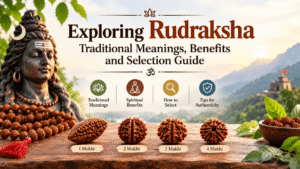

Rudraksha is one of the most recognizable spiritual symbols associated with Indian traditions. For generations, these natural seeds have been used in prayer, meditation, chanting, and devotional practices. Their connection with Lord Shiva, distinctive natural patterns, and traditional significance have made them popular among people interested in spirituality and Indian heritage.
Although Rudraksha beads may look similar at first glance, they can differ in size, shape, texture, and most importantly, the number of natural faces on their surface. These faces are known as mukhi. Each mukhi variety carries its own traditional associations and symbolism.
For beginners, understanding these differences is a useful first step toward selecting a bead that matches their interests and spiritual practices.
What Makes Rudraksha Special?
Rudraksha seeds come from the fruit of trees belonging to the Elaeocarpus genus. The seeds have a naturally textured surface and distinctive lines that make them visually different from many other spiritual beads.
In traditional Indian practices, Rudraksha is valued not simply for its appearance but for its spiritual and cultural significance. It is frequently incorporated into malas, necklaces, bracelets, and meditation practices.
The number of natural faces is one of the primary characteristics used to classify a Rudraksha. Different face counts are traditionally connected with different deities, qualities, and spiritual themes.
Understanding the Mukhi Concept
A mukhi refers to a natural face or division visible on the surface of the bead. These divisions generally run from one end of the seed to the other.
The classification is based on the natural structure of the seed rather than its size or color. This is why careful examination is important when purchasing Rudraksha.
The first four varieties are particularly useful for beginners because they introduce several core themes found in traditional Rudraksha practices.
1 Mukhi Rudraksha
The 1 Mukhi Rudraksha is traditionally associated with Lord Shiva and is considered highly significant in many spiritual traditions. It is commonly connected with single-pointed awareness, focus, unity, and spiritual discipline.
The symbolism of a single face can be understood as representing a focused mind and a clear spiritual direction. For someone interested in meditation, this traditional association can be particularly meaningful.
This variety is also known for being difficult to find in authentic form. Because of its reputation and high demand, buyers should be especially careful when evaluating claims about authenticity.
When purchasing this bead, consider the seller’s reputation, product information, authenticity documentation, and overall quality rather than relying only on attractive marketing descriptions.
2 Mukhi Rudraksha
The 2 Mukhi Rudraksha is traditionally linked with Ardhanarishvara, the combined form of Shiva and Shakti. It symbolizes the balance between two complementary energies.
Harmony and unity are therefore central themes associated with this variety. These ideas can be applied to relationships, family connections, teamwork, and even the balance between different aspects of one’s own personality.
For someone who wants a spiritual reminder to cultivate patience, understanding, and cooperation, this traditional symbolism may hold special value.
The bead can also be incorporated into a meditation routine focused on developing inner balance and peaceful relationships.
3 Mukhi Rudraksha
The 3 Mukhi Rudraksha is traditionally associated with Agni, the sacred fire. Fire has deep symbolic importance in Indian traditions and is often connected with purification, transformation, energy, and renewal.
Because of this association, this variety is often considered a symbol of moving beyond the past and embracing positive change.
Its traditional meaning can be particularly relevant for people entering a new stage of life or trying to develop greater confidence and determination. The bead itself should not be viewed as a guaranteed solution, but its symbolism can serve as a personal reminder of transformation.
Meditation with a clear intention can help people use such symbolism as part of their broader spiritual routine.
4 Mukhi Rudraksha
The 4 Mukhi Rudraksha is traditionally associated with Lord Brahma and is connected with knowledge, creativity, learning, communication, and intellectual development.
These associations make it particularly meaningful for people who spend time studying, teaching, writing, speaking, or developing creative skills.
Knowledge is often considered an important path toward personal development, and this bead can symbolically represent curiosity and the continuous pursuit of learning.
A person may choose this variety as a reminder to remain open to new ideas and to communicate with greater clarity and awareness.
Understanding the Traditional Associations
Each mukhi has its own traditional identity. Understanding these associations can make the selection process more meaningful.
|
Type |
Traditional Connection |
Main Symbolism |
|
1 Mukhi |
Lord Shiva |
Focus, unity, spiritual awareness |
|
2 Mukhi |
Ardhanarishvara |
Balance, harmony, relationships |
|
3 Mukhi |
Agni |
Transformation, renewal, purification |
|
4 Mukhi |
Lord Brahma |
Knowledge, creativity, communication |
These meanings are based on traditional beliefs and cultural practices. They should not be presented as scientifically established effects or guaranteed outcomes.
How to Decide Which Rudraksha Is Right for You
There is no universal answer to which Rudraksha is “best.” The most suitable choice depends on the individual’s purpose, beliefs, and connection with the traditional symbolism.
Before buying a bead, ask yourself what you are looking for. Are you interested in meditation? Do you want a traditional spiritual accessory? Are you collecting natural spiritual products? Or are you simply interested in Indian cultural heritage?
Once you understand your purpose, you can explore the traditional meaning of different varieties and select one that feels appropriate.
Checking Rudraksha Authenticity
Authenticity is one of the most important considerations when purchasing Rudraksha. Natural beads have naturally formed mukhi lines, while artificial modifications may sometimes be used to make a bead appear different.
When shopping, look for detailed product photographs and descriptions. If testing or certification is available, check what information it provides.
Buyers should also be cautious about extraordinary claims. A seller who promises guaranteed health, wealth, success, or relationship outcomes should be approached carefully.
The spiritual importance of Rudraksha comes from tradition and personal belief, not from exaggerated marketing claims.
Choosing the Right Size and Form
Rudraksha beads are available in different sizes and shapes. A larger bead is not automatically better than a smaller one.
Comfort should be considered if you intend to wear the bead regularly. A bead used in a necklace or bracelet should be suitable for everyday handling and should be securely attached.
Natural variation is also normal. Slight differences in texture, shape, and color do not necessarily indicate poor quality.
Wearing Rudraksha in Daily Life
Many people wear Rudraksha as a necklace, bracelet, pendant, or mala. Others prefer to keep it in a meditation room or prayer area.
Different families and spiritual traditions may follow different guidelines regarding how and when a bead should be worn. Beginners should therefore avoid assuming that one practice applies to everyone.
The most important thing is to use the bead respectfully and in a way that fits your personal beliefs.
Using Rudraksha During Meditation
A Rudraksha mala can be used during mantra repetition or meditation. Moving through the beads provides a physical structure that can help establish a consistent practice.
For beginners, starting with a few minutes of quiet meditation can be more useful than trying to follow an overly complicated routine.
The bead can become an anchor for attention, while the real focus remains on breathing, awareness, prayer, or mantra repetition.
Caring for Your Rudraksha
Rudraksha is a natural seed, so basic care is important. Avoid exposing it unnecessarily to chemicals, perfumes, cosmetics, and harsh cleaning products.
If the bead becomes dirty, gentle cleaning is preferable to aggressive scrubbing. Allow it to dry naturally and avoid excessive moisture.
For malas and bracelets, inspect the thread regularly. Replacing a weak thread before it breaks can prevent accidental loss of the beads.
When not in use, keep Rudraksha in a clean and dry place.
Common Buying Mistakes
One common mistake is purchasing a bead solely because it is described as extremely powerful. Spiritual products are personal, and traditional significance differs between varieties.
Another mistake is ignoring the seller’s reputation. Before purchasing an expensive or rare bead, take time to research the source and compare product information.
Buyers should also avoid choosing solely according to price. A very low price can sometimes indicate poor quality, misleading classification, or lack of reliable information.
Finally, do not assume that a spiritual product can replace professional treatment or expert advice for serious personal matters.
Rudraksha as Part of a Spiritual Lifestyle
For many people, Rudraksha is not simply an accessory. It can become part of a broader lifestyle that includes meditation, prayer, mindfulness, self-reflection, and traditional practices.
The real value may come from the intention behind using the bead. A person who wears Rudraksha while regularly practicing meditation may associate it with discipline and consistency.
In this way, the bead can become a personal symbol of the values a person wants to cultivate.
Final Thoughts
Rudraksha combines natural beauty with centuries of spiritual and cultural tradition. Its different mukhi varieties offer a range of symbolic meanings, making the subject interesting for both beginners and experienced practitioners.
The first four types provide a simple introduction to this tradition. Their associations with focus, harmony, transformation, knowledge, and creativity can help people understand why different beads are traditionally selected for different purposes.
When choosing Rudraksha, take time to learn about its traditional background, inspect its natural characteristics, verify authenticity, and select a variety that genuinely connects with your personal intentions.
Most importantly, approach Rudraksha with respect and realistic expectations. Its greatest significance comes from the tradition, symbolism, and personal meaning that an individual brings to the practice.